Publication•September 15, 2023
free
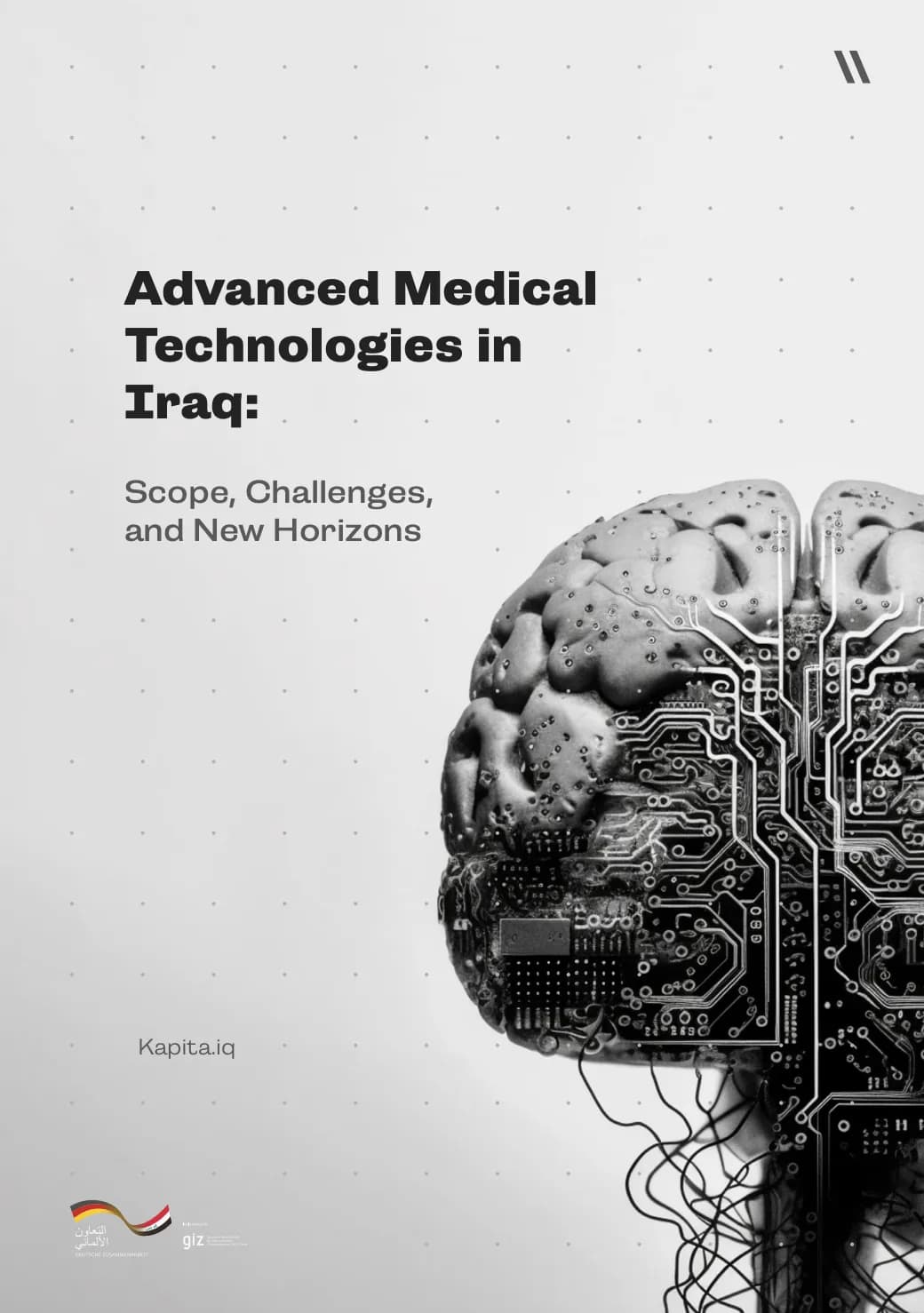
Advanced Medical Technologies in Iraq: Scope, Challenges, and New Horizons
#Market Research Iraq#Healthcare Industry Iraq#Healthcare Market Iraq#Medical Technology Iraq#MedTech Iraq
September 15, 2023Kapita Research Team
This brief provides market research insights into advanced medical technologies in Iraq, examining their current adoption, key challenges, and emerging opportunities within the healthcare sector. It focuses on medical education technologies, Electronic Medical Records (EMR), 3D planning and printing, and fertility and assisted reproductive technologies (ART), offering evidence-based insights for healthcare providers, investors, and policymakers assessing Iraq’s evolving health technology landscape.
Publication Overview
September 15, 2023
This brief provides market research insights into advanced medical technologies in Iraq, examining their current adoption, key challenges, and emerging opportunities within the healthcare sector. It focuses on medical education technologies, Electronic Medical Records (EMR), 3D planning and printing, and fertility and assisted reproductive technologies (ART), offering evidence-based insights for healthcare providers, investors, and policymakers assessing Iraq’s evolving health technology landscape.
Full Content
Executive Summary
This brief examines the state of advanced medical technologies in Iraq, focusing on their current adoption, practical applications, and the challenges limiting their integration into the healthcare system. While Iraq’s healthcare sector continues to face structural and capacity-related constraints, emerging medical technologies present opportunities to improve service quality, efficiency, and accessibility across both public and private healthcare institutions.
The Iraqi healthcare system, within a decade, went into a spiral of rapid decline in services. The healthcare system goes back to the 1950s. Up until the 1980s, the health sector witnessed remarkable prosperity and development. Similar to the other sectors, wars and sanctions heavily undermined the system as Iraq experienced a rise in the number of casualties and a decline in oil exports. The state of the health sector deteriorated after 2003 with around 12% of hospitals destroyed.
The healthcare system is still implementing outdated approaches to the treatment and prevention of diseases, yet several technologies have evolved to fill that gap and improve the state of the healthcare sector. These technologies include 3D printing, Electronic Medical Records (EMR), and robotics. The implementation generally benefits the healthcare industry through better healthcare accessibility, medical care error reduction, and easier and more accurate access to patients’ records.
Despite being one of the oldest systems in the region, Iraqi medical education is effectively incapable of providing medical students with the proper education and hands-on experience opportunities. This is due to the lack of constant improvement, outdated curricula, political instability, and excessive numbers of students. Fortunately, utilization of technologies in medical education, such as online learning platforms, 3D printing, medical apps, electronic medical records, and virtual reality can actually change the current state of education as they offer accessible resources, dedicated platforms, modern learning experiences, and flexible learning environment to name a few.
The development of Electronic Medical Records (EMR) is a system allowing healthcare hospitals, pharmacies, and laboratories to share patients’ medical records more efficiently instead of the traditional paper charts. Attempts were made to use this technology in the Iraqi healthcare system, yet they faced lack of flexibility, higher costs, and poor technical support. However, there are several simple implementations of the EMR concept in Iraq, such as Razi, Tadawi, and Tabib Iraq. The aim is to provide online booking, medical service, consultation, and doctors' information.
3D printing is yet another cost-effective and high-accuracy technological advancement across a wide range of fields in the medical industry, such as dentistry, orthopedics, and vascular surgery. 3D printing is a process of creating 3-dimensional physical objects from scratch using computer digital design. Despite the benefits and application, 3D printing in Iraq is not gaining enough attention, due to poor facilities supporting this technology, lack of government support and social awareness, and most importantly the limited investment opportunities by the private sector. These challenges hinder the adoption and development of 3D printing in the Iraqi health sector.
Fertility and Assisted Reproductive Technologies (ART) are gaining more attention from the Iraqi community and investors alike. The number of centers providing this treatment has increased as well as the types of services provided. The fertility rate has fallen to 3.4 in 2022 from 6.6 in 1980, which has led to the adoption of different technologies, such as In Vitro Fertilization (IVF), Intracytoplasmic Sperm Injection (ICSI), Frozen Embryo Transfer (FET), Pre-implantation Genetic Diagnosis (PGD), and Cryopreservation. These technologies vary in operations and treatment methods, yet the common goal is fertility and pregnancy. The ART has presented a great business and investment opportunity while still being challenged by limited equipment and experts; higher treatment costs; cultural and religious resistance (gradually fading away); and political instability.
Overall, advanced medical technologies in Iraq remain unevenly adopted, with progress driven primarily by private-sector initiatives rather than systemic reform. While structural barriers persist, targeted investment, regulatory support, and capacity-building efforts could significantly accelerate technology adoption and improve healthcare outcomes across the country.
Publication Information
Publication Details
Author:Kapita Research Team
Published:September 15, 2023
Category:report
Documents:1 PDF
Tags:5
Academic Metadata
Suggested Citation
Kapita Research Team. (2023). Advanced Medical Technologies in Iraq: Scope, Challenges, and New Horizons. Kapita Research.
Need Custom Research?
Contact our research team to discuss your specific research needs and objectives. We provide tailored analysis for your business.
Contact Research TeamWork with Kapita Research
Need this level of insight for your own decision?
This report is a sample of what our team produces. We run custom market research, sector deep-dives, competitor mapping, and market-entry studies for businesses and investors operating in Iraq. Tell us what you're trying to figure out — the first consultation is free.
Related Publications