Publication•July 18, 2023
free
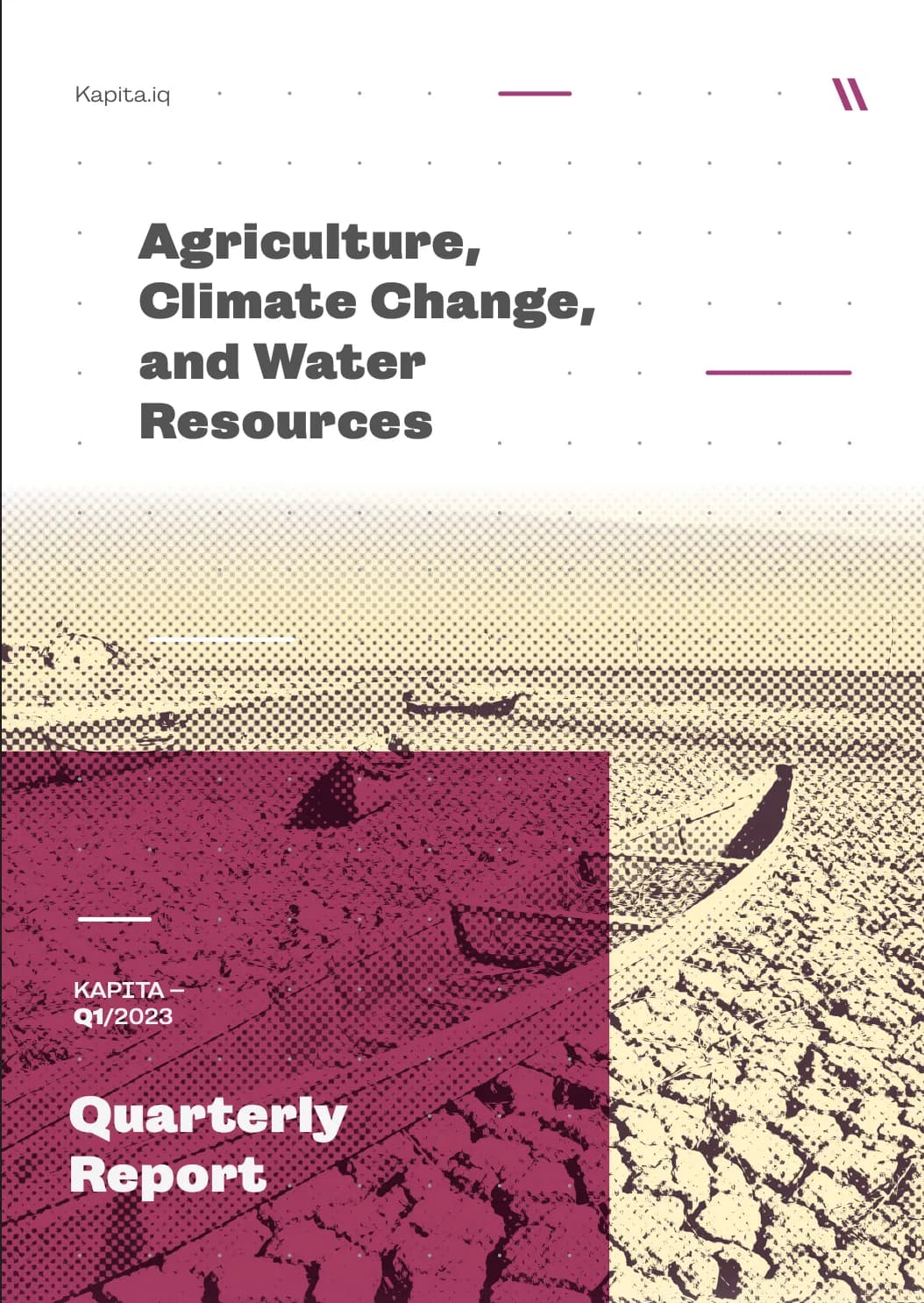
Agriculture, Climate Change, and Water Resources: Quarterly Report
#Agriculture Sector Iraq#Climate Change Iraq#Water Resources Iraq#Food Security Iraq#Market Research Iraq
July 18, 2023Kapita Research Team
This quarterly report provides an in-depth overview of agriculture, climate change, and water resources in Iraq, covering the period from January 1 to March 31, 2023. It tracks key developments, policy actions, and persistent challenges across these sectors using a methodology based on monitoring and analyzing news from multiple credible sources. The report serves as a reference for policymakers, researchers, and stakeholders concerned with food security, water management, and climate resilience in Iraq.
Publication Overview
July 18, 2023
This quarterly report provides an in-depth overview of agriculture, climate change, and water resources in Iraq, covering the period from January 1 to March 31, 2023. It tracks key developments, policy actions, and persistent challenges across these sectors using a methodology based on monitoring and analyzing news from multiple credible sources. The report serves as a reference for policymakers, researchers, and stakeholders concerned with food security, water management, and climate resilience in Iraq.
Full Content
Executive Summary
This report covers the period between January 1, 2023, and March 31, 2023, providing an overview of developments and challenges in Iraq's agricultural sector, climate change, and water resources. Historically known as the "breadbasket of the Middle East," Iraq is currently grappling with the severe impacts of climate change, which, combined with years of neglect and instability, threaten livelihoods through food insecurity, water scarcity, and environmental degradation.
Key Developments and Advancements:
- Government Commitment: The new Iraqi government, under Prime Minister Al-Sudani, has shown a strong commitment to revitalising the agricultural sector, aiming for self-sufficiency and increased export activities. This includes a significant emphasis on the comprehensive modernisation of the agricultural sector and upgrading irrigation infrastructure.
- Support for Farmers: Efforts are underway to address long-standing issues, such as the imminent distribution of Kurdistan farmers’ dues for 2015-2016, with financial provisions allocated in the budget bill. The government has set the price for wheat at 850,000 IQD per ton for the current season, with prompt payments promised. Furthermore, interest-free loans for five years are being offered to encourage transformational projects in plant and animal production, alongside customs exemptions for modern irrigation technologies like axial sprayers.
- Agricultural Production & Trade: Iraq has signed a Memorandum of Understanding with Syria, Lebanon, and Jordan to enhance agricultural cooperation and exchange seeds with superior characteristics to achieve food security. Notable advancements include the successful cultivation of strawberries using advanced hydroponic techniques in Anbar, the Ministry of Agriculture revealing 625 varieties of dates and turning towards "Vertical Agriculture" for palm trees, and plans to build new wheat silos to increase storage capacity to 3-3.5 million tons. Kurdistan has achieved self-sufficiency in chicken meat, marketing a surplus of 93,000 tons annually to central and southern Iraq.
- Climate Change Action: The government is actively engaged in combating climate change, participating in global conferences and productive discussions with neighboring countries regarding water allocation. Iraq is the first country in the Middle East to join the United Nations Water Convention (Helsinki Convention) to ensure sustainable use of transboundary water resources. A major national initiative to plant five million trees and palm trees across Iraq has been launched. Karbala aims to be the first Iraqi province to transition to eco-friendly electric or hybrid vehicles to reduce emissions.
- Water Resources Management: The Iraqi government has initiated proactive steps to secure its rightful share of river waters through discussions and negotiations with neighbouring countries. Plans include distributing water from strategic reservoirs in three lakes in western Iraq and building dams to store rainwater. Kurdistan has also announced the completion of six dams to mitigate drought, with more under construction.
Persistent Challenges:
- Corruption: The agricultural sector continues to grapple with pervasive corruption, manifested through practices like the presence of expired crops in the market and unnecessary imports from neighbouring countries, which undermine growth and sustainability. Instances of fraud and embezzlement involving agricultural equipment contracts and fertilizer transactions have been reported.
- Water Scarcity and Drought: Iraq faces a dire water crisis due to decreasing rainfall, dwindling river levels, and reduced water allocations from upstream countries like Turkey and Iran. This has led to the disappearance of lakes, record-low water levels in rivers like the Tigris, and has caused Iraq to lose 49% of its agricultural production due to drought and desertification. Experts warn of an impending humanitarian disaster if the situation persists.
- Economic Impacts: The rise in the dollar exchange rate has significantly impacted the agricultural sector and consumers. Meat and egg prices have soared due to factors such as a shortage of livestock imports, high animal feed costs, and smuggling operations.
- Lack of Support/Neglect: Some farmers and animal breeders complain of a lack of government support, leading to collective emigration from the profession in some provinces. The poultry industry in Kurdistan also faces risks of bankruptcy due to government neglect and the rising dollar.
Conclusion:
The first quarter of 2023 marks a turning point for Iraq, with the new government initiating a comprehensive agenda to address agriculture, climate change, and water resources. While notable progress has been made, substantial improvements require sustained commitment, effective governance, and international support. Addressing persistent issues like corruption, illicit activities, and the unprecedented water scarcity crisis is crucial for safeguarding the nation's food security and fostering a more resilient and prosperous future.
The first quarter of 2023 marks a turning point for Iraq, with the new government initiating a comprehensive agenda to address agriculture, climate change, and water resources. While notable progress has been made, substantial improvements require sustained commitment, effective governance, and international support. Addressing persistent issues like corruption, illicit activities, and the unprecedented water scarcity crisis is crucial for safeguarding the nation's food security and fostering a more resilient and prosperous future.
Publication Information
Publication Details
Author:Kapita Research Team
Published:July 18, 2023
Category:report
Documents:1 PDF
Tags:5
Academic Metadata
Suggested Citation
Kapita Research Team. (2023). Agriculture, Climate Change, and Water Resources: Quarterly Report. Kapita Research.
Need Custom Research?
Contact our research team to discuss your specific research needs and objectives. We provide tailored analysis for your business.
Contact Research TeamWork with Kapita Research
Need this level of insight for your own decision?
This report is a sample of what our team produces. We run custom market research, sector deep-dives, competitor mapping, and market-entry studies for businesses and investors operating in Iraq. Tell us what you're trying to figure out — the first consultation is free.
Related Publications