Publication•August 30, 2021
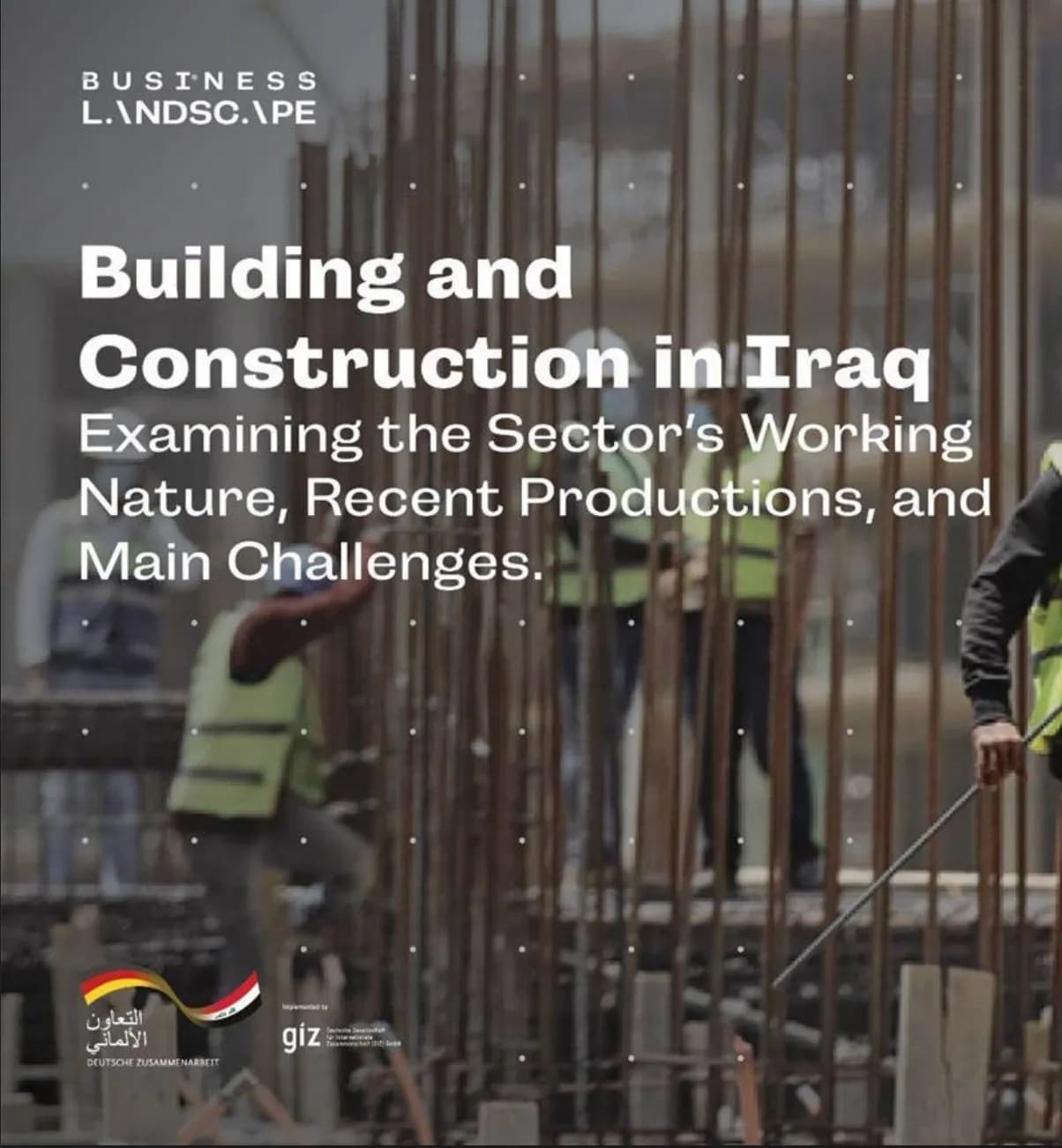
Exploring Building & Construction in Iraq: Examining the sector’s Working Nature, Recent Productions, and Main Challenges
#ICT Iraq#Human Resources#Capacity Building
August 30, 2021mujahed
This report offers an overview of Iraq's building and construction sector. It examines the sector’s working nature, recent productions, and main challenges, delving into its establishments, operations, economics, and issues. Covering both public and private subdivisions, the report highlights their fluctuations and the sector's potential as a leading non-oil industry. It also identifies significant impediments such as corruption, administrative problems, and external factors. PDF
Publication Overview
August 30, 2021
This report offers an overview of Iraq's building and construction sector. It examines the sector’s working nature, recent productions, and main challenges, delving into its establishments, operations, economics, and issues. Covering both public and private subdivisions, the report highlights their fluctuations and the sector's potential as a leading non-oil industry. It also identifies significant impediments such as corruption, administrative problems, and external factors. PDF
Full Content
Executive Summary
This report provides an overview of the Iraqi construction and building sector, mainly the most recent years, diving into its establishments, inner-workings, economics, issues, and production.
This report provides an overview of the Iraqi construction and building sector, mainly the most recent years, diving into its establishments, inner-workings, economics, issues, and production.
Sector Subdivisions
The Iraqi construction sector is divided into public (which includes government-funded projects such as roads, bridges, public buildings, and housing projects) and private (including privately funded projects such as dwellings, commercial and residential buildings, as well as industrial and social service structures) sectors, each with their own processes of establishing a project.
Both the public and private sectors have witnessed many fluctuations throughout the years, across various facets. In the public sector, recent data from 2019 shows that the cost of construction and building projects has decreased by 34% (totaling at 431.6 billion IQD) when compared to 2018, with a significant 57% drop in the wages and benefits of workers (69.3 billion IQD) from the previous year, despite the notable 13% increase in their numbers. There was also a marked decrease in the numbers of project contracts, dropping to 691 contracts in 2019, after slightly regaining ground at 3,878 contracts in 2013. This general downward trend may be attributed to the security challenges and the COVID-19 pandemic taking place in the last two years.
In the private sector dwellings appear to make up the majority of projects, the numbers of these projects have dropped over the past 5 years, settling at 12,039 projects in 2019. Consequently, this trend is reflected in their cost, reaching 1.14 trillion IQD, after peaking at 7.16 trillion in 2013. Employment and paid wages in the private sector appear to be at a relatively stable level spanning the last 5 years, with Baghdad being the province where the majority of those workers are placed.
Sector Production
This sector holds the potential to be one of the top-grossing non-oil sectors in Iraq. However, data from 2020 shows that only 35.4% of initiated projects (including road, bridges, buildings, and residential complex projects) have been completed, with the remaining majority of them still at various stages of development. The sector’s percentage of the gross domestic product witnessed a dramatic drop to 2.22% when compared to previous years, straying afar from the expected contribution published in the Iraqi national development plan. Iraq took 7th place when comparing the gross value added of the sector for 2019 to neighbouring and Arab countries. The 2021 Iraqi state budget allocated a total of 1.786 trillion IQD to the Ministry of Construction, Housing, Municipalities, and Public Works, in addition to 263 million USD in borrowed funds.
Sector Challenges
The allocated funds to this sector are mostly public, hence, government and political dynamics have a strong influence on the sector’s development. Corruption is another major issue in Iraq’s government system, as it is amongst the 20 lowest ranking countries in the world, ranking 160 out of 180. Corruption strongly discourages economic activity in the sector, it also leads to negligence and consequential non-ethical compliance with laws and regulations. Administrative issues contribute strongly to the failure of a construction or building project. Unqualified contractors, bad consultant experiences, interfering owners, and poor project management can all lead to the downfall of a construction project.
Publication Information
Publication Details
Author:mujahed
Published:August 30, 2021
Category:report
Documents:1 PDF
Tags:3
Academic Metadata
DOIkmnknmmkk
Suggested Citation
kmnknmmkk
Need Custom Research?
Contact our research team to discuss your specific research needs and objectives. We provide tailored analysis for your business.
Contact Research TeamWork with Kapita Research
Need this level of insight for your own decision?
This report is a sample of what our team produces. We run custom market research, sector deep-dives, competitor mapping, and market-entry studies for businesses and investors operating in Iraq. Tell us what you're trying to figure out — the first consultation is free.
Related Publications