Publication•July 7, 2022
free
Climate Change Overview: Impacts, Mitigation, and Adaptation in Iraq
#Climate Change Iraq#Climate Policy Iraq#Environmental Research Iraq#Water Resources Iraq#Market Research Iraq
July 7, 2022Kapita Research Team
This report provides a comprehensive overview of climate change in Iraq, analyzing its environmental, economic, and social impacts, as well as national mitigation and adaptation efforts. It examines key climate risks including rising temperatures, water scarcity, desertification, and energy-related emissions, alongside Iraq’s commitments under the Paris Agreement and its Nationally Determined Contributions (NDCs).
Publication Overview
July 7, 2022
This report provides a comprehensive overview of climate change in Iraq, analyzing its environmental, economic, and social impacts, as well as national mitigation and adaptation efforts. It examines key climate risks including rising temperatures, water scarcity, desertification, and energy-related emissions, alongside Iraq’s commitments under the Paris Agreement and its Nationally Determined Contributions (NDCs).
Full Content
Executive Summary
As global warming becomes more evident, Iraq is on the front row of the climate change show. Kapita’s research team conducted a thorough analysis of Iraq’s present climate scene, the major issues caused by and exacerbating the calamity, and the Iraqi government’s efforts in the global battle against climate change.
As global warming becomes more evident, Iraq is on the front row of the climate change show. Kapita’s research team conducted a thorough analysis of Iraq’s present climate scene, the major issues caused by and exacerbating the calamity, and the Iraqi government’s efforts in the global battle against climate change.
The following is a summary of key findings from this report:
Introduction
• The Underlying Driver of Change.
Long periods of dry weather frequently induced migrations that brought about the evolution of the first human civilizations and provoked the collapse of others throughout Iraq’s history.
Long periods of dry weather frequently induced migrations that brought about the evolution of the first human civilizations and provoked the collapse of others throughout Iraq’s history.
• Scorching Summers.
Lasting from April to October, Iraq’s summers are characterized by extremely high temperatures, which can reach up to 51 Celsius degrees, as well as low humidity and a lack of precipitation.
Lasting from April to October, Iraq’s summers are characterized by extremely high temperatures, which can reach up to 51 Celsius degrees, as well as low humidity and a lack of precipitation.
• Squeezed Population.
Due to the country’s harsh climate, its 42 million inhabitants are concentrated in limited regions that provide them with food, water, and economic necessities.
Due to the country’s harsh climate, its 42 million inhabitants are concentrated in limited regions that provide them with food, water, and economic necessities.
• Grim Future.
According to several sources, Iraq will face a multitude of catastrophic climate anomalies by 2050. These include a 2 Celsius degree increase in mean annual temperature, a 9% decline in mean annual average rainfall, and a 22% decrease in runoff, threatening life as we know it in the country.
According to several sources, Iraq will face a multitude of catastrophic climate anomalies by 2050. These include a 2 Celsius degree increase in mean annual temperature, a 9% decline in mean annual average rainfall, and a 22% decrease in runoff, threatening life as we know it in the country.
Major Climate Change Issues in Iraq
• Growing Desertification.
40 percent of Iraq’s land is desert, this number will continue to grow with an annual loss of 100 square kilometers of arable land to desertification.
40 percent of Iraq’s land is desert, this number will continue to grow with an annual loss of 100 square kilometers of arable land to desertification.
• Struggling Agriculture.
As cultivated land continues to dwindle and farmers abandon their properties, the country faces a decline in agriculture that falls well short of meeting public demand.
As cultivated land continues to dwindle and farmers abandon their properties, the country faces a decline in agriculture that falls well short of meeting public demand.
• Shrinking Waters.
Water resources continue to decline in levels as water insecurity threatens 7 million of the Iraqi population, with over 20,000 people displaced due to drought and drastic climate consequences.
Water resources continue to decline in levels as water insecurity threatens 7 million of the Iraqi population, with over 20,000 people displaced due to drought and drastic climate consequences.
• Rainfall Levels Below Average.
With precipitation falling 40% below normal levels in some regions of the country, the winter of 2020/2021 recorded the second lowest rainfall in four decades.
With precipitation falling 40% below normal levels in some regions of the country, the winter of 2020/2021 recorded the second lowest rainfall in four decades.
• Record-Breaking Rising Heat.
Temperature is soaring high to new extremities as degrees above 50°C are becoming more common with the country being reported to warm at least 2 times faster than the global average.
Temperature is soaring high to new extremities as degrees above 50°C are becoming more common with the country being reported to warm at least 2 times faster than the global average.
• Prevailing Dust and Sand Storms.
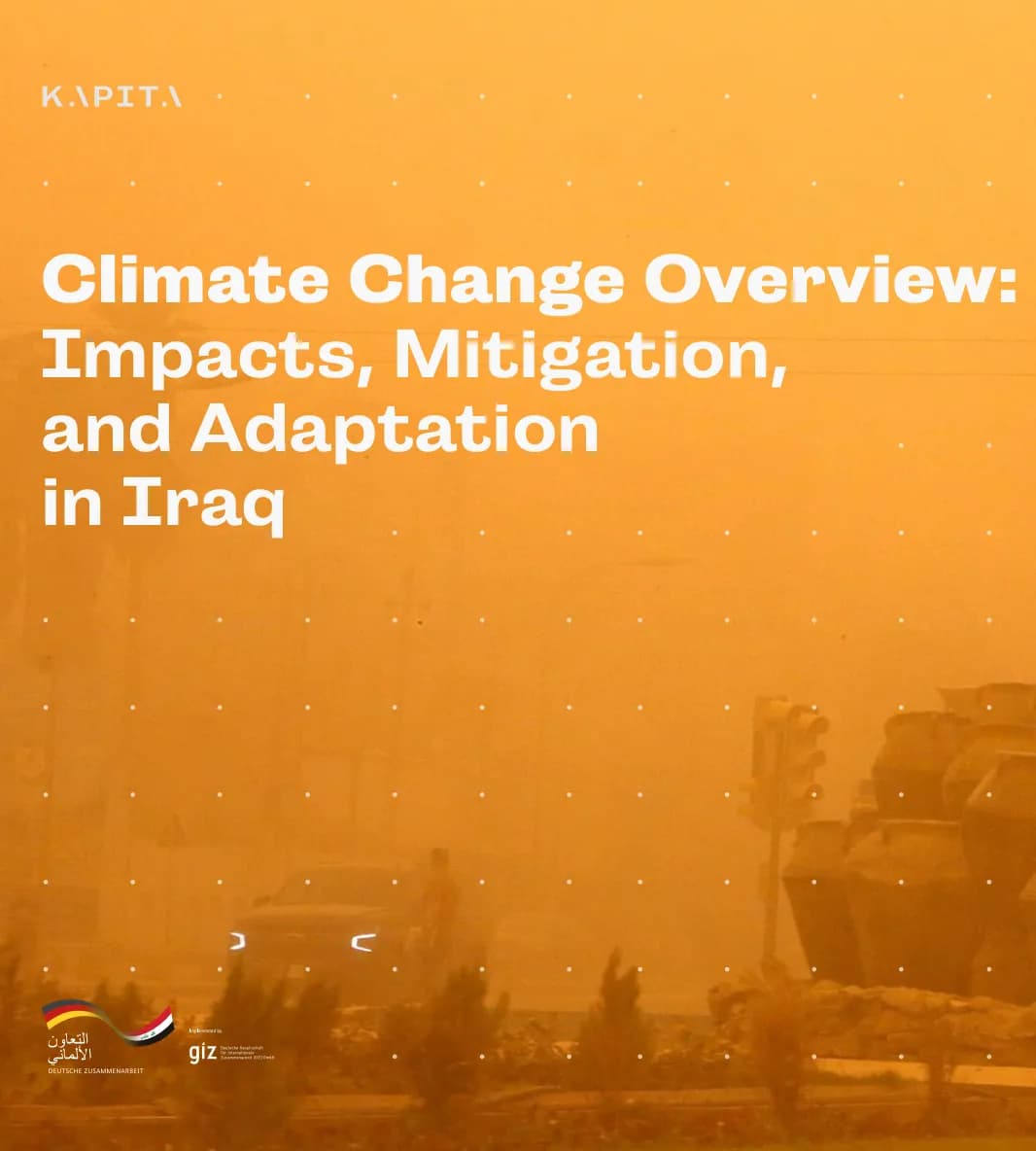
2022 saw some of the country’s worst dust and sand storms in recent history, with dozens of people hospitalized and airports shut down. Over the last two decades, the number of dusty days each year has increased from 243 to 272, and is expected to reach 300 by the year 2050.
2022 saw some of the country’s worst dust and sand storms in recent history, with dozens of people hospitalized and airports shut down. Over the last two decades, the number of dusty days each year has increased from 243 to 272, and is expected to reach 300 by the year 2050.
• Expanding Salty Wastelands.
Spread of salinization in the central and southern regions is growing and contributing to a yearly 5% loss of used farmlands with an estimated damage of US$ 300 million annually.
Spread of salinization in the central and southern regions is growing and contributing to a yearly 5% loss of used farmlands with an estimated damage of US$ 300 million annually.
• More Energy Consumed, More Carbon Released.
The peak demand for electricity has recorded an increase of about 46% in recent years as the country tries to cope with the prolonged, extremely hot summers and is projected to further expand. The energy reliance on fossil fuels and the fall of hydro power generation intensified CO2 emissions by 194% between the last two decades.
The peak demand for electricity has recorded an increase of about 46% in recent years as the country tries to cope with the prolonged, extremely hot summers and is projected to further expand. The energy reliance on fossil fuels and the fall of hydro power generation intensified CO2 emissions by 194% between the last two decades.
Nationally Determined Contributions of Iraq (NDC)
• Joining the Paris Agreement.
Iraq ratified the Paris Agreement in October 2021 with the submission of its first NDC, laying the foundations for the country’s efforts to mitigate climate change.
Iraq ratified the Paris Agreement in October 2021 with the submission of its first NDC, laying the foundations for the country’s efforts to mitigate climate change.
• A Green Revolution.
Iraq’s government is committed to reforming numerous sectors (industrial, agricultural, etc.) in order to meet its goal of a 1–2% decrease in total greenhouse gas emissions by the year 2030.
Iraq’s government is committed to reforming numerous sectors (industrial, agricultural, etc.) in order to meet its goal of a 1–2% decrease in total greenhouse gas emissions by the year 2030.
• Top Contributor of GHG.
The energy sector is the primary source of greenhouse gas emissions in Iraq, accounting for 75% of total emissions. As a result, the Iraqi government has prioritized this sector in order to address the issue and develop more environmentally friendly energy sources.
The energy sector is the primary source of greenhouse gas emissions in Iraq, accounting for 75% of total emissions. As a result, the Iraqi government has prioritized this sector in order to address the issue and develop more environmentally friendly energy sources.
Publication Information
Publication Details
Author:Kapita Research Team
Published:July 7, 2022
Category:report
Documents:1 PDF
Tags:5
Academic Metadata
Suggested Citation
Kapita Research. (2022). Climate Change Overview: Impacts, Mitigation, and Adaptation in Iraq. Kapita Research.
Need Custom Research?
Contact our research team to discuss your specific research needs and objectives. We provide tailored analysis for your business.
Contact Research TeamWork with Kapita Research
Need this level of insight for your own decision?
This report is a sample of what our team produces. We run custom market research, sector deep-dives, competitor mapping, and market-entry studies for businesses and investors operating in Iraq. Tell us what you're trying to figure out — the first consultation is free.
Related Publications