Publication•December 6, 2022
free
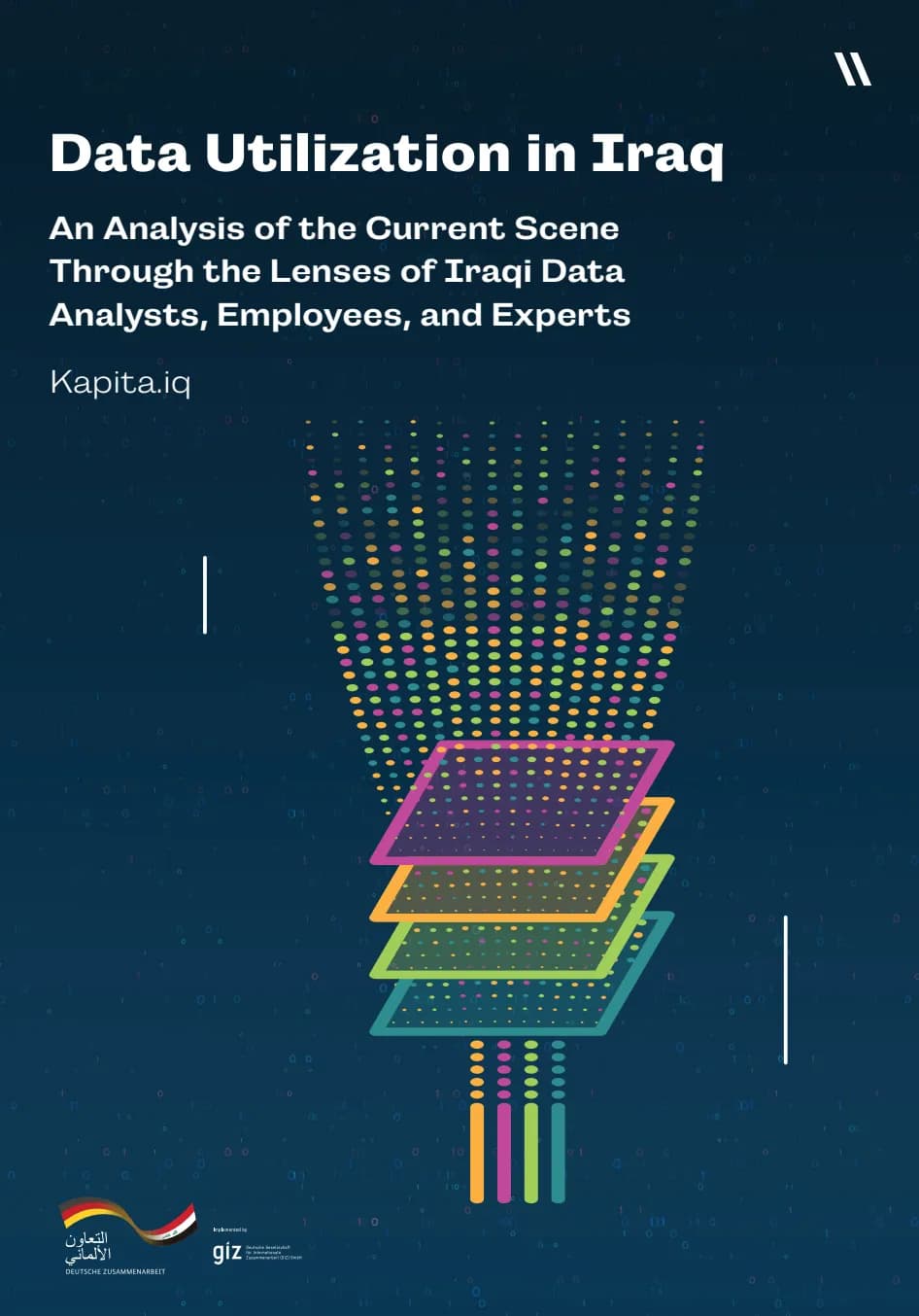
Data Utilization in Iraq: An Analysis of the Current Scene Through the Lenses of Iraqi Data Analysts, Employees, and Experts
#Digital transformation Iraq#ICT Iraq#Digital Economy Iraq#Market Research Iraq
December 6, 2022Kapita Research Team
This research analyses the data utilization landscape in Iraq’s private sector through the perspectives of data analysts, employees, and industry experts, highlighting key constraints, tool usage patterns, and organizational gaps in data pipelines.
Publication Overview
December 6, 2022
This research analyses the data utilization landscape in Iraq’s private sector through the perspectives of data analysts, employees, and industry experts, highlighting key constraints, tool usage patterns, and organizational gaps in data pipelines.
Full Content
Executive Summary
Data availability alone does not translate into value; its impact depends on how effectively it is collected, analyzed, and embedded into decision-making. While Iraq attracts growing interest as a data source, the effective utilization of data within the private sector remains limited.
Key results from our research are as follows:
• Data as a Competitive Advantage. The Iraqi market is rapidly growing, with many ambitious players entering and ready to compete. The long-standing establishments across sectors are well aware of the competition, and see a competitive advantage through the utilization of data when the market is saturated.
• The Iraqi Community is Not Data-Oriented. Both survey results and key informants agreed to Iraqis not being very data-driven, with almost 86% of survey respondents agreeing with that statement. Most companies view data analysis as a feature they would want but not particularly need.
• Scarcity of Data. There is a limited number of certain data sources in Iraq, the main governmental ones are the Central Statistical Organization (CSO) and the Central Bank of Iraq (CBI). Other sources of data include first-party customer data and social media.
• Shortage of Data Analysts. Data-driven businesses in Iraq are minimal, which in turn leads to lack of demand for data analysts. Formal education does not equip students with the required skills for data analysis, which means most data analysts in the job market are self-taught.
• Appreciation of Data. The larger the company, the more appreciative it is of data and its proper utilization, as data allows them a competitive advantage. Most respondents (87%) find data utilization crucial in improving an organizations’ decision.
• Discontinuity in Data. Iraqi companies of all sizes have gaps in their data pipeline (collection, storage, analysis, reporting). However, larger organizations have the capacity to collect data and store it properly, but later analysis and reporting are still deficient.
• Advancement of Tools. Spreadsheets are the most utilized tool, as 74% of respondents reported using them. Fewer individuals use programming and business intelligence tools. However, 27% of respondents indicated that they were familiar with programming tools but that their use was not requested in their current positions.
• The Learning Journey. Self-learning and workplaces were tied in first place for where respondents learned their data analysis skills proficiently, while formal education provided respondents with mostly little benefit.
• Company Support. Many respondents (44.6%) believe their employers are supportive of them learning data analysis and developing their skills, this sentiment was supported by key informant interviews where they emphasized the importance of incorporating training and professional development into the company culture.
Publication Information
Publication Details
Author:Kapita Research Team
Published:December 6, 2022
Category:report
Documents:1 PDF
Tags:4
Academic Metadata
Suggested Citation
Kapita Research. (Year). Data Utilization in Iraq: An Analysis of the Current Scene Through the Lenses of Iraqi Data Analysts, Employees, and Experts. Kapita Research.
Need Custom Research?
Contact our research team to discuss your specific research needs and objectives. We provide tailored analysis for your business.
Contact Research TeamWork with Kapita Research
Need this level of insight for your own decision?
This report is a sample of what our team produces. We run custom market research, sector deep-dives, competitor mapping, and market-entry studies for businesses and investors operating in Iraq. Tell us what you're trying to figure out — the first consultation is free.
Related Publications