Publication•September 14, 2023
free
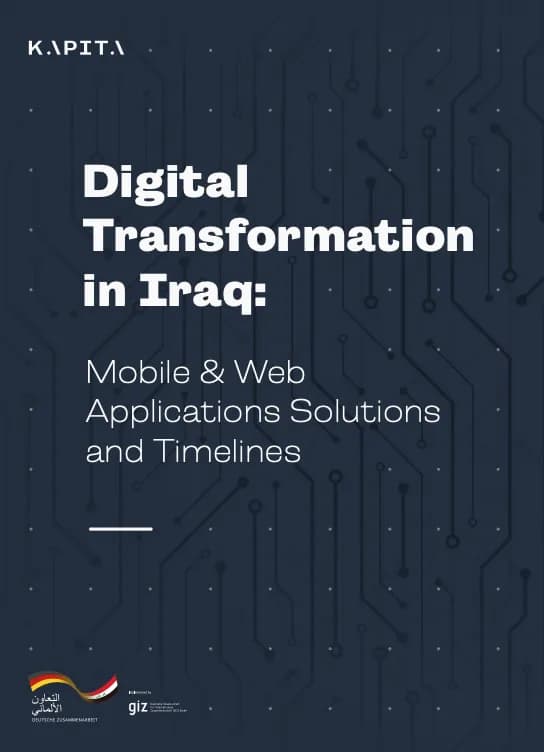
Digital Transformation in Iraq: Mobile & Web Applications Solutions and Timelines
#Market Research Iraq#Digital transformation Iraq#Mobile Applications Iraq#Web Applications Iraq#Digital Economy Iraq
September 14, 2023Kapita Research Team
This report provides market research insights into digital transformation in Iraq, mapping existing mobile and web application solutions across key sectors including education, retail, transportation, healthcare, finance, and telecommunications. It identifies sector-specific challenges, timelines, and emerging opportunities, offering practical insights for companies, investors, and public-sector stakeholders assessing feasible digital solutions in the Iraqi market.
Publication Overview
September 14, 2023
This report provides market research insights into digital transformation in Iraq, mapping existing mobile and web application solutions across key sectors including education, retail, transportation, healthcare, finance, and telecommunications. It identifies sector-specific challenges, timelines, and emerging opportunities, offering practical insights for companies, investors, and public-sector stakeholders assessing feasible digital solutions in the Iraqi market.
Full Content
Executive Summary
This report examines the state of digital transformation in Iraq, focusing on the adoption of mobile and web applications across key economic sectors. It maps existing digital solutions, assesses implementation timelines, and identifies practical opportunities for technology-driven innovation, while highlighting the structural challenges shaping Iraq’s digital ecosystem.
- The digital transformation in Iraq has led to the emergence of various learning technology products. Legacy products like self-paced eLearning apps, Digital ReferenceWare apps, and Collaboration-based Learning apps have gained popularity. Prominent startups like IoT Kids, Medresty, Eduba, Newton, T3leem, Abwaab, and Orcas offer innovative solutions for education and learning.
- The future of retail is characterized by accessible and convenient consumer access through mobile phones and computers. Iraq’s online shopping scene shows promising growth, with marketplaces like Miswag and Orisdi securing funding. Specialized platforms like Turquaz, Astico, and iQ Cars cater to specific retail categories. Challenges in accessing international marketplaces are being addressed by platforms like PurePlatform and Wasil.
- The transportation sector in Iraq has witnessed significant growth in online-to-offline services. Platform-to-consumer delivery services have experienced remarkable user growth, with an increase of 78.9% over five years. Startups like Mishwar, Talabatey, Al-Saree3, and regional players like Toters and Talabat have entered the Iraqi market, introducing healthy competition and providing customers with a range of choices for anything delivery services.
- The digital transformation of the healthcare sector in Iraq has introduced new market segments and roles within the digital healthcare ecosystem. These include information providers, healthcare intermediaries and market intermediaries, amongst others. Existing mobile and web solutions in Iraq include initiatives such as Amal Tech, doctor recommendation apps, and platforms for pharmaceutical ordering and pricing transparency.
- Digital financial services are becoming increasingly popular among customers in Iraq. Services encompass various financial areas such as payments, lending, insurance, investments, and more. Mobile payment services and digital-only payment cards like NEO, NassPay, QiCard, Arab Payment Services, and Switch have emerged, along with registered brokers RIFX and TNFX offering mobile applications for live trading monitoring.
- The travel, tourism, and hospitality sector in Iraq, although still in its early stages, presents opportunities for specialized travel startups. These startups, such as Sindibad, Kawenter, Safr, and Fly Baghdad, offer services like flight bookings, visa procurement, tours, and ticket purchases. While the sector is highly fragmented, digital elements are still crucial for its future development.
- The telecommunications industry in Iraq is experiencing significant advancements in phone, internet, and television services. Major operators like Zain, Asiacell, Korek, and Earthlink offer mobile applications for easy recharging, service subscriptions, offers, and grievance reporting. The experimental launch of eSIM technology marks a recent breakthrough in Iraq’s telecommunications sector.
- Progress in the energy sector is possible with opportunities for decentralization and improved energy generation. New services include direct-to-consumer offerings like solar panels, energy efficient equipment, and digitized energy dispatch services. Startups like KESK, Tanweer Energy, and Al Hadbaa are introducing sustainable energy solutions in Iraq.
- Digital transformation in government portals and utilities has the potential to enhance decision-making processes and improve service delivery. The Iraqi government has launched the Ur portal, providing hyperlinks to 89 services to reduce bureaucracy. However, there is room for improvement, such as enabling online payment services for utilities. Iraq Post offers electronic payment services and package tracking, while Qanoonji provides easy access to Iraqi laws and regulations.
Overall, digital transformation in Iraq is progressing unevenly across sectors, with private-sector initiatives driving adoption faster than public systems. While infrastructure, regulation, and payment systems remain key constraints, the presence of functional digital solutions across multiple industries demonstrates clear demand and readiness for scalable technology adoption when structural barriers are addressed.
Publication Information
Publication Details
Author:Kapita Research Team
Published:September 14, 2023
Category:report
Documents:1 PDF
Tags:5
Academic Metadata
Suggested Citation
Kapita Research Team. (2023). Digital Transformation in Iraq: Mobile & Web Applications Solutions and Timelines. Kapita Research.
Need Custom Research?
Contact our research team to discuss your specific research needs and objectives. We provide tailored analysis for your business.
Contact Research TeamWork with Kapita Research
Need this level of insight for your own decision?
This report is a sample of what our team produces. We run custom market research, sector deep-dives, competitor mapping, and market-entry studies for businesses and investors operating in Iraq. Tell us what you're trying to figure out — the first consultation is free.
Related Publications