Publication•September 4, 2023
free
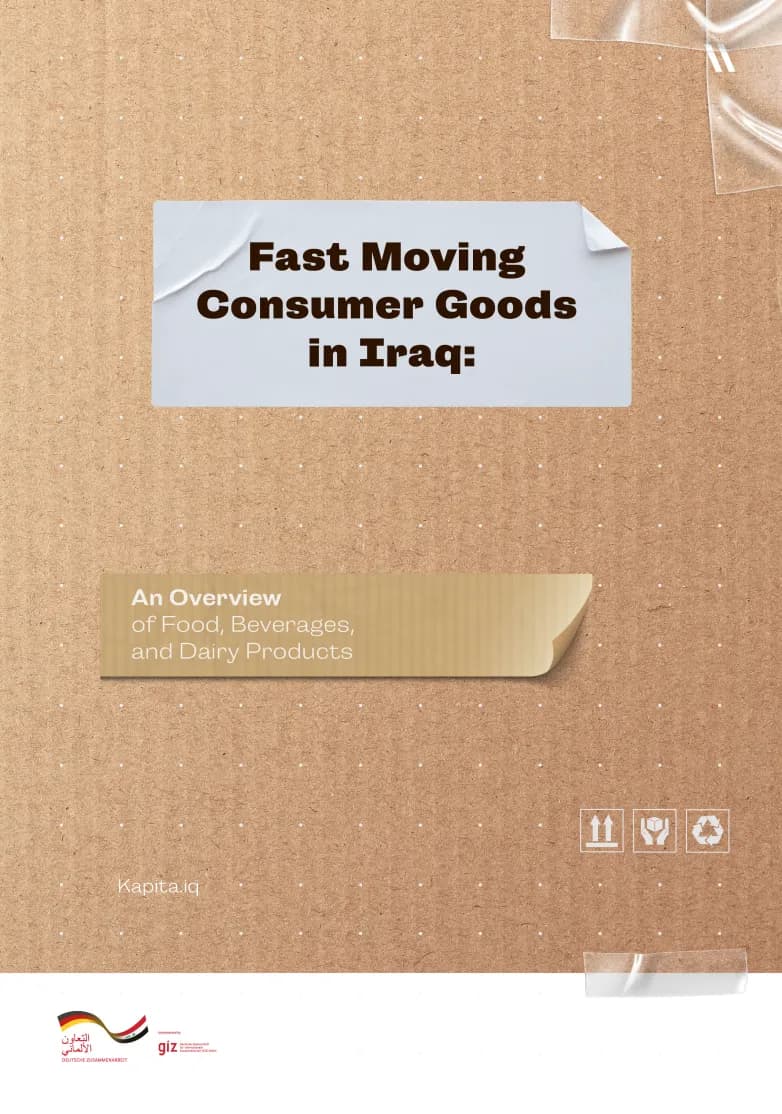
Fast Moving Consumer Goods in Iraq: An Overview of Food, Beverages, and Dairy Products
#FMCG Iraq#Food and Beverage Market Iraq#Dairy Industry Iraq#Consumer Goods Iraq#Manufacturing Sector Iraq#Market Research Iraq
September 4, 2023Kapita Research Team
This brief provides market research insights into Iraq’s fast-moving consumer goods (FMCG) sector, with a focus on food, beverages, and dairy products. It examines Iraq’s reliance on imports, the structure of local manufacturing, and the roles of SMEs and large producers, while highlighting key challenges, investment opportunities, and the evolving retail and technology landscape shaping the sector.
Publication Overview
September 4, 2023
This brief provides market research insights into Iraq’s fast-moving consumer goods (FMCG) sector, with a focus on food, beverages, and dairy products. It examines Iraq’s reliance on imports, the structure of local manufacturing, and the roles of SMEs and large producers, while highlighting key challenges, investment opportunities, and the evolving retail and technology landscape shaping the sector.
Full Content
Executive Summary
This brief analyzes the fast-moving consumer goods (FMCG) sector in Iraq, with a particular focus on food, beverages, and dairy products. It examines Iraq’s heavy reliance on imports, the structure and capacity of domestic manufacturing, and the role of SMEs and startups in addressing supply gaps. The analysis highlights key challenges constraining local production while identifying opportunities for investment, technology adoption, and value-chain development within the Iraqi FMCG market.
This brief analyzes the fast-moving consumer goods (FMCG) sector in Iraq, with a particular focus on food, beverages, and dairy products. It examines Iraq’s heavy reliance on imports, the structure and capacity of domestic manufacturing, and the role of SMEs and startups in addressing supply gaps. The analysis highlights key challenges constraining local production while identifying opportunities for investment, technology adoption, and value-chain development within the Iraqi FMCG market.
- Food Manufacturing. The food and beverages sector ranks number one when it comes to the number of small and medium-sized production establishments and second regarding the large sized-production establishments. The total number of establishments of all sizes across Iraq and KRG is 10495 and 117 for food and beverages manufacturing in 2020, respectively. The bakery and mill grain products are the leading industries.
- Manufacturing Challenges. Food and beverage manufacturing faces several challenges that factored in creating a discouraging economic environment. Local production cannot generally serve Iraqi consumers and cope with importation. When the government suspends the import ban of certain commodities to overcome the food supply shortage and high prices, it creates a negative snowball effect in the long run: a short-term solution with long-term economic consequences.
- Manufacturing Opportunities. There are potential investment opportunities within the food industry in the form of new manufacturing technologies and farmers’ value chains. Domestic production of dairy products still follows the manual traditional processes. On a larger scale, the Iraqi market witnesses a surplus of a wide variety of vegetables, which opens doors for canning factories, such as tomato paste.
- Retails Scene. The Iraqi market has witnessed a significant transition over the past years regarding retailing. Due to the availability of a wider selection of products and convenient shopping experiences, chain markets and hypermarkets have gained popularity among Iraqi customers.
- Startups. Many Iraqi-based startups and SMEs specialized in food production have been established to attract Iraqi customers and shift attention toward local production rather than imported commodities. More to that, the tendency of incorporating technology and online tools into new startups has become widely prevalent among entrepreneurs for its advantages in comparison to the traditional way. For instance, many palm date startups have based their business ideas in terms of services and products on utilizing online tools for better customer reach and efficiency.
Publication Information
Publication Details
Author:Kapita Research Team
Published:September 4, 2023
Category:Research
Documents:1 PDF
Tags:6
Academic Metadata
Suggested Citation
Kapita Research Team. (2023). Fast Moving Consumer Goods in Iraq: An Overview of Food, Beverages, and Dairy Products. Kapita Research.
Need Custom Research?
Contact our research team to discuss your specific research needs and objectives. We provide tailored analysis for your business.
Contact Research TeamWork with Kapita Research
Need this level of insight for your own decision?
This report is a sample of what our team produces. We run custom market research, sector deep-dives, competitor mapping, and market-entry studies for businesses and investors operating in Iraq. Tell us what you're trying to figure out — the first consultation is free.
Related Publications