Publication•October 2, 2024
free
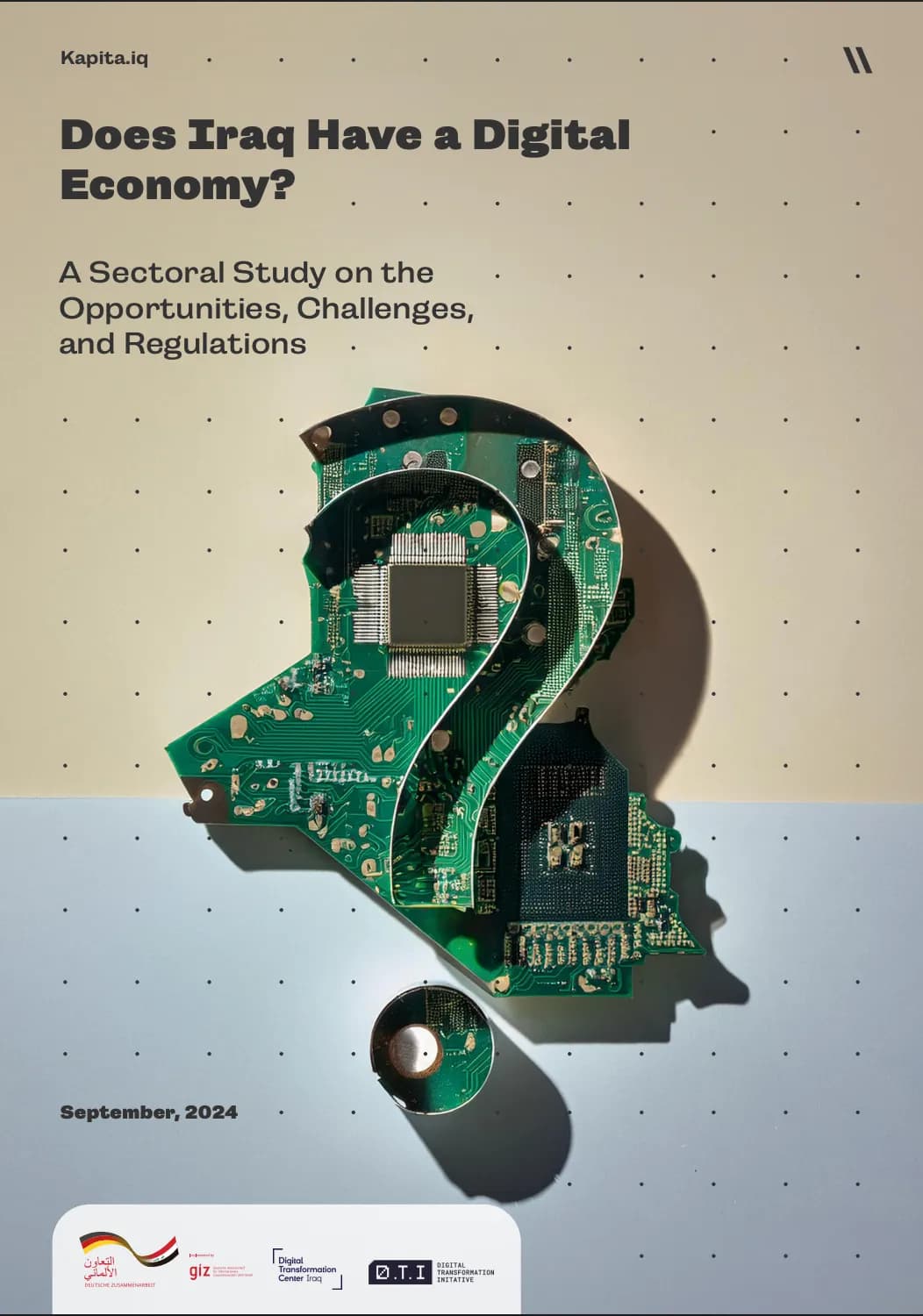
Does Iraq Have a Digital Economy? A Sectoral Study on the Opportunities, Challenges, and Regulations
#Digital Economy#Market Research Iraq#Digital transformation Iraq#Iraq Digital Infrastructure#MENA Digital Comparison
October 2, 2024Kapita Research Team
This research assesses Iraq's digital economy, examining its current state, opportunities, challenges, and regulations. It delves into eight key sectors: e-commerce, telecommunications, fintech, mobility, medtech, edtech, tourism, and agritech. The report highlights Iraq's journey towards digital transformation, detailing progress, hindering factors like outdated laws and underdeveloped infrastructure, and future development potential.
Publication Overview
October 2, 2024
This research assesses Iraq's digital economy, examining its current state, opportunities, challenges, and regulations. It delves into eight key sectors: e-commerce, telecommunications, fintech, mobility, medtech, edtech, tourism, and agritech. The report highlights Iraq's journey towards digital transformation, detailing progress, hindering factors like outdated laws and underdeveloped infrastructure, and future development potential.
Full Content
Executive Summary
This publication provides market research insights into the digital economy in Iraq, analyzing the progress of digital transformation across key sectors including e-commerce, fintech, telecommunications, ride-hailing, healthcare, education, tourism, and agriculture. The report is designed for companies, investors, policymakers, and organizations seeking data-driven insights on the Iraqi market, highlighting both growth opportunities and structural barriers affecting digital adoption.
This publication provides market research insights into the digital economy in Iraq, analyzing the progress of digital transformation across key sectors including e-commerce, fintech, telecommunications, ride-hailing, healthcare, education, tourism, and agriculture. The report is designed for companies, investors, policymakers, and organizations seeking data-driven insights on the Iraqi market, highlighting both growth opportunities and structural barriers affecting digital adoption.
Drawing on sector-level analysis and regional comparison, the study examines regulatory frameworks, infrastructure readiness, payment systems, and workforce capabilities shaping Iraq’s digital economy. It also assesses Iraq’s position relative to selected MENA markets to identify areas of competitive advantage and structural gaps. The findings aim to support market entry strategies, investment decisions, and policy planning within Iraq’s evolving digital landscape.
Definition of Iraq's Digital Economy:
The digital economy in Iraq refers to economic activities enabled by digital technologies, including internet connectivity, mobile infrastructure, software platforms, and data-driven services. It encompasses the digital production, distribution, and consumption of goods and services, as well as the transformation of traditional industries and business processes through technology adoption. Within Iraq, the digital economy plays a growing role in improving market access, service delivery, and private-sector efficiency despite ongoing infrastructure and regulatory challenges.
Sector Classification and Evolution:
The study focuses on eight sectors undergoing digital transformation, classifying them into two groups:
- Digitally Integrated Sectors: Retail (E-commerce), Finance (FinTech), Telecommunications, and Mobility (Ride-hailing). These sectors have seen significant digital adoption, with Iraq often leapfrogging development stages; for instance, e-commerce developed as social commerce, and FinTech apps emerged to overcome an underdeveloped banking sector.
- Digitally Nascent Sectors: Education (EdTech), Healthcare (MedTech), Tourism, and Agriculture (AgriTech).
Key Findings and Challenges Across Sectors:
Several overarching challenges hinder Iraq's digital economy development:
- Dominance of Cash Payments: Cash remains the primary payment method across digitally transforming sectors, with digital payments estimated at less than 10% of transactions.
- Outdated/Absent Legal and Regulatory Frameworks: Laws and regulations are a major obstacle, often being outdated, unclear, or non-existent, making it difficult for tech-based businesses to operate within a well-regulated market.
- Underdeveloped Infrastructure: Poor internet connectivity, an unreliable electricity grid, and inadequate transportation infrastructure (e.g., addressing issues, last-mile delivery complexities) critically undermine the growth of digitally-enabled businesses.
- Human Resource Limitations: A lack of advanced digital skills and digital illiteracy among youth are significant barriers to digital transformation.
Sector-Specific Insights:
- E-commerce: The sector is highly fragmented, dominated by social media platforms like Facebook and Instagram, with international models often proving ineffective due to Iraq's unique internet evolution. Logistical challenges, such as difficulties with addressing and last-mile delivery, are significant.
- Telecommunications: This is a competitive sector with high licensing costs and an underdeveloped regulatory framework marked by overlapping responsibilities between the Commission of Media and Communication (CMC) and the Ministry of Communications (MoC). It is the largest private sector employer in Iraq, directly and indirectly.
- Fintech: Has seen remarkable development in infrastructure and electronic transactions, with significant growth in electronic payments and card adoption. However, exchange rate volatility and complex Central Bank of Iraq (CBI) regulations pose challenges for startups.
- Mobility (Ride-hailing): Has experienced significant growth, with daily online taxi rides reaching approximately 250,000 across Iraq, though traditional offline rides still account for 70% of the total.
- MedTech: The healthcare sector is traditionally hardware-intensive and requires high capital investment. Private hospitals and clinics are leading in adopting modern technologies, but the sector suffers from minimal adoption of digital technologies like electronic medical records in public institutions and a lack of data protection regulations.
- EdTech: Faces challenges from rapid student enrollment outpacing school capacity and a regulatory framework that hinders startups with segmented licensing requirements.
- Tourism: The sector, valued at approximately $4 billion, has expanded online services but is impacted by a significant portion of unlicensed companies, a costly taxation system, and a lack of Iraqi airline data integration via API.
- AgriTech: Is the least digitally integrated sector, characterized by farmers' reluctance to adopt new methods and a reliance on short-term government vision and international efforts. Informal employment dominates this sector, and accurate market size data is scarce.
Youth Perception and Digital Competency:
Iraqi youth show a strong interest (over 80%) in working within the digital economy, particularly in e-commerce and educational technology, and believe digital skills will positively impact their careers and salaries. There is widespread optimism (over 80%) regarding Iraq's digital transformation initiatives. However, there is a recognized need to align educational programs with in-demand skills, and informal training is perceived as more practical and up-to-date than traditional education. A self-assessment tool (DigCompSat) indicated that participants have strong proficiency in Information and Data Literacy and Problem Solving, moderate in Safety, but need more development in Digital Content Creation skills, especially programming.
Publication Information
Publication Details
Author:Kapita Research Team
Published:October 2, 2024
Category:report
Documents:1 PDF
Tags:5
Academic Metadata
Suggested Citation
Kapita Research Team. Digital Economy and Digital Transformation in Iraq: Sectoral Overview and Regional Comparison. Baghdad, 2024.
Need Custom Research?
Contact our research team to discuss your specific research needs and objectives. We provide tailored analysis for your business.
Contact Research TeamWork with Kapita Research
Need this level of insight for your own decision?
This report is a sample of what our team produces. We run custom market research, sector deep-dives, competitor mapping, and market-entry studies for businesses and investors operating in Iraq. Tell us what you're trying to figure out — the first consultation is free.
Related Publications