Publication•September 30, 2023
free
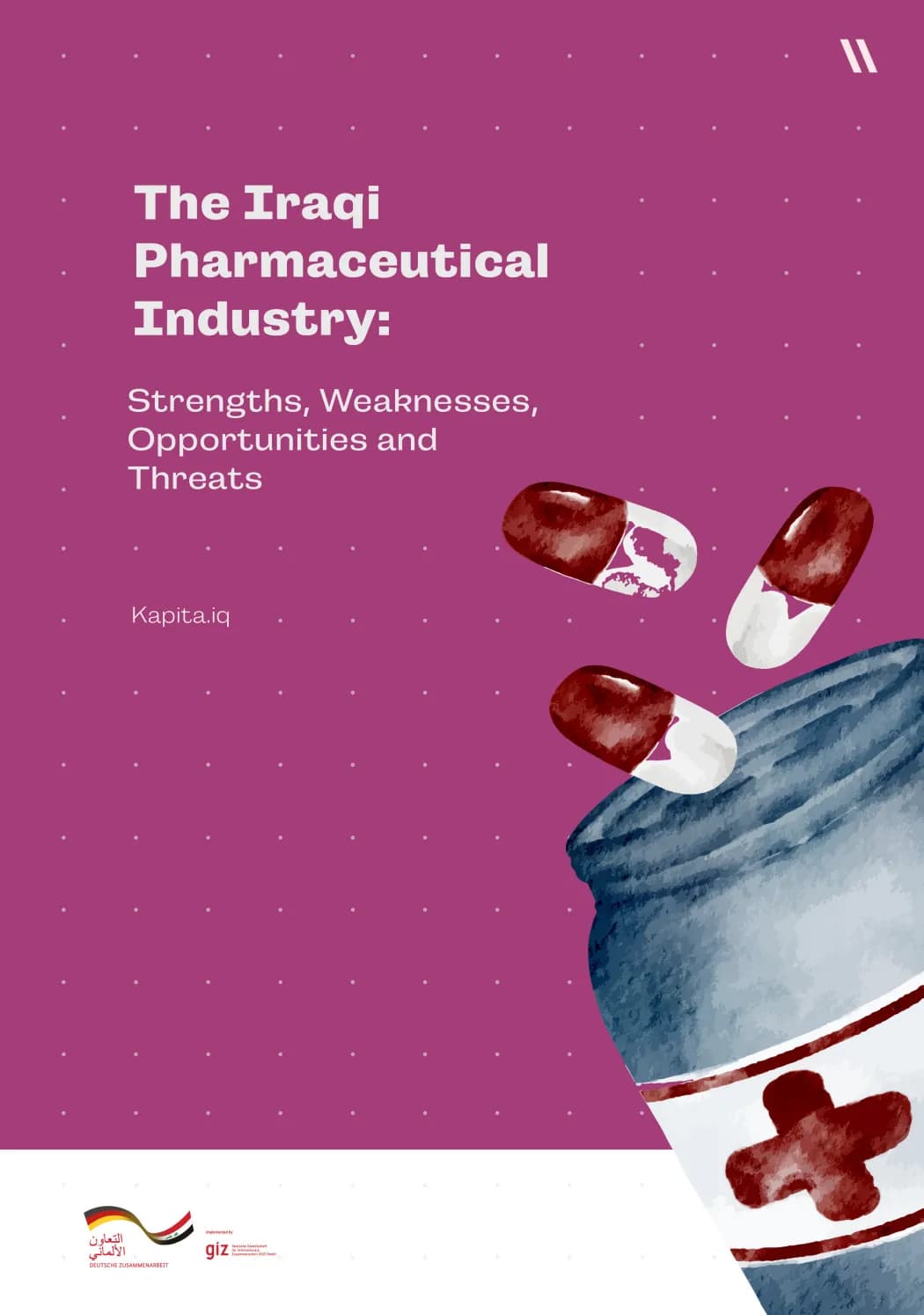
The Iraqi Pharmaceutical Industry: Strengths, Weaknesses, Opportunities and Threats
#Pharmaceutical Industry Iraq#Healthcare Market Iraq#Drug Manufacturing Iraq#Healthcare Industry Iraq#Market Research Iraq
September 30, 2023Kapita Research Team
This report provides a market research analysis of Iraq’s pharmaceutical manufacturing industry, examining its current structure, regulatory environment, production capacity, and growth potential. Through a detailed SWOT analysis, the study highlights key challenges, opportunities, and investment considerations for local and international pharmaceutical companies operating in or entering the Iraqi market.
Publication Overview
September 30, 2023
This report provides a market research analysis of Iraq’s pharmaceutical manufacturing industry, examining its current structure, regulatory environment, production capacity, and growth potential. Through a detailed SWOT analysis, the study highlights key challenges, opportunities, and investment considerations for local and international pharmaceutical companies operating in or entering the Iraqi market.
Full Content
Executive Summary
The pharmaceutical industry in Iraq has historically faced structural and regulatory challenges; however, recent reforms and emerging opportunities have created a more favorable environment for growth. This report analyzes the pharmaceutical manufacturing sector in Iraq, examining its current state, key constraints, and future potential, with a particular focus on industrial capacity, regulation, and investment readiness
The pharmaceutical industry in Iraq has historically faced structural and regulatory challenges; however, recent reforms and emerging opportunities have created a more favorable environment for growth. This report analyzes the pharmaceutical manufacturing sector in Iraq, examining its current state, key constraints, and future potential, with a particular focus on industrial capacity, regulation, and investment readiness
This report draws upon a range of sources, including government data, industry reports, and expert analysis, to provide valuable insights into the Iraqi pharmaceutical market. The highlights are as follows:
- Reliance on Imports: A significant health burden accompanies Iraq’s growing population, making it necessary to support the drug manufacturing sector. Most of Iraq’s essential medicines, vaccines, and active pharmaceutical ingredients used for manufacturing are imported.
- Uneven Spread of Pharmacists: The increase in the number of pharmacists in Iraq has led to an increase in the number of pharmacies, but there is an uneven spread of pharmacists across the country. Duhok and Maysan have less than 2 pharmacists allocated to every 10,000 people, while governorates in the Middle Euphrates region have up to 7 pharmacists per 10,000 people.
- Iraq Lags Behind in Expertise and Capacity: Iraq has a large number of pharmacists and pharmacy students, who are mostly allocated to public hospitals or private community pharmacies. Many pharmacists could contribute to the drug industry with the right governmental and private sector support, training, and development efforts.
- Active Pharmaceutical Ingredients are Hard to Come by: Iraq has access to natural resources that can be used in the production of pharmaceuticals, but no proper investment has ever taken advantage of those natural resources. Therefore, active pharmaceutical ingredients take 4-6 months to be acquired.
- The Government, Now and Then: The government’s lack of support has hampered the industry’s growth, with many of the regulations introduced on private manufacturers during the 1990s still in place. Nevertheless, the new government is cooperating with private drug manufacturers to resolve many of the unnecessary regulations and help rejuvenate the sector.
This report shines a bright light on many aspects of the pharmaceutical sector, mainly the industrial part of the pharmaceutical industry. Iraqi manufacturers have been resilient through years of international sanctions, security struggles, shortage of expertise, and lack of governmental support, but many are still supplying the Iraqi market with excellent quality medicine. The conducted strengths, weaknesses, opportunities, and threats (SWOT) analysis provides insight into this vital niche of manufacturing, which is of significant importance to the well-being of Iraq as an economy.
It is our hope that this report, with the proper strategies and investments, may be used as a resource by local and international pharmaceutical companies to contribute to the improvement of the healthcare system in the country.
Publication Information
Publication Details
Author:Kapita Research Team
Published:September 30, 2023
Category:report
Documents:1 PDF
Tags:5
Academic Metadata
Suggested Citation
Kapita Research Team. (2023). Iraq Pharmaceutical Industry Report: SWOT Analysis, Opportunities, and Challenges. Kapita Research.
Need Custom Research?
Contact our research team to discuss your specific research needs and objectives. We provide tailored analysis for your business.
Contact Research TeamWork with Kapita Research
Need this level of insight for your own decision?
This report is a sample of what our team produces. We run custom market research, sector deep-dives, competitor mapping, and market-entry studies for businesses and investors operating in Iraq. Tell us what you're trying to figure out — the first consultation is free.
Related Publications