Publication•March 11, 2026
free
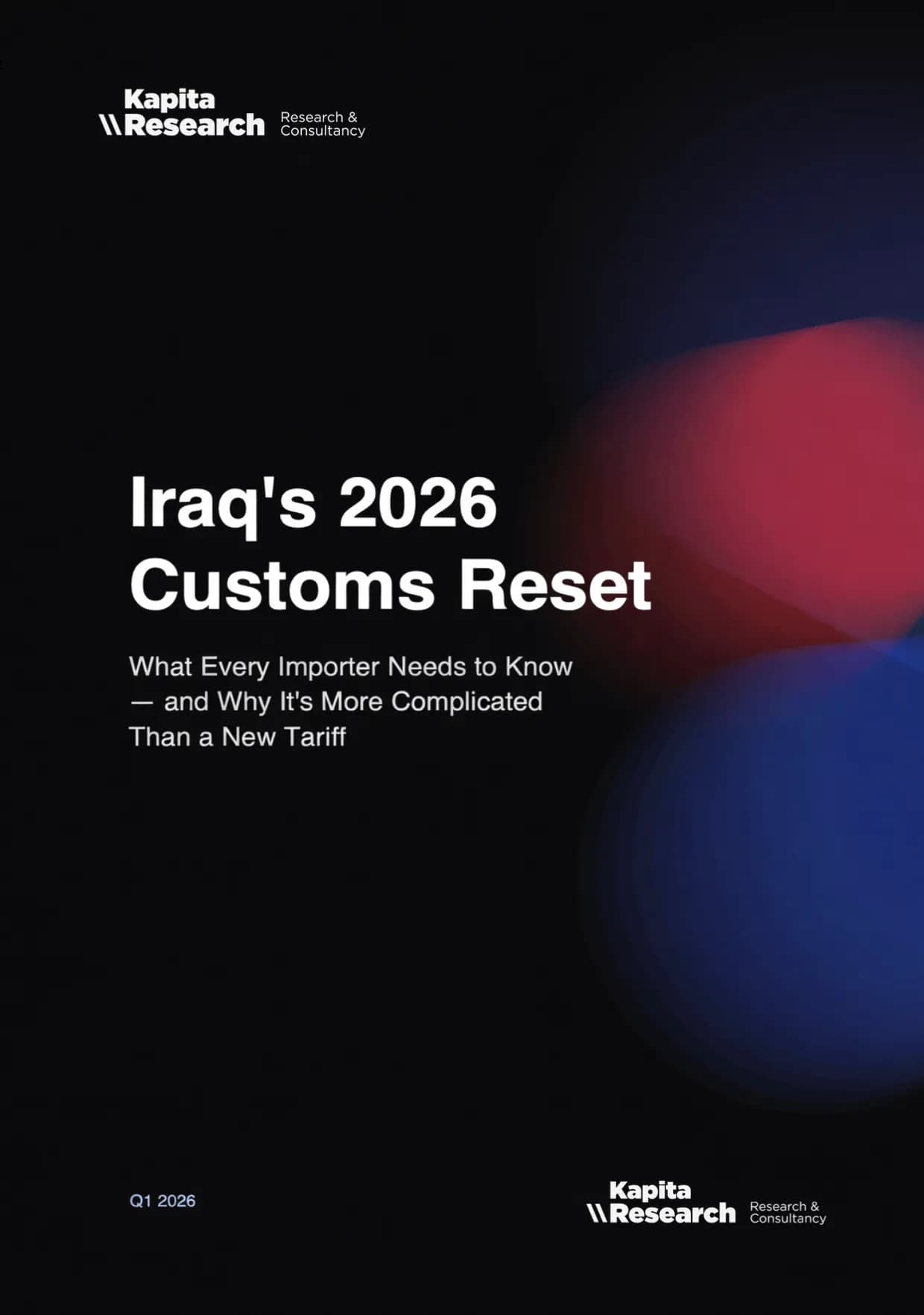
Iraq Ports Crisis 2026: How the ASYCUDA Customs System Is Disrupting Imports and Supply Chains
#Iraq Market Research#Private Sector Iraq#Economic Stability Iraq#Iraq Economy
March 11, 2026Kapita Research Team
A detailed analysis of Iraq’s 2026 port congestion and customs disruption caused by the new ASYCUDA digital customs system. This report explains how changes in tariff calculations, historical invoice data, and pre-declaration rules have led to thousands of containers being delayed at Iraq’s major ports, creating major supply chain challenges for businesses and importers.
Publication Overview
March 11, 2026
A detailed analysis of Iraq’s 2026 port congestion and customs disruption caused by the new ASYCUDA digital customs system. This report explains how changes in tariff calculations, historical invoice data, and pre-declaration rules have led to thousands of containers being delayed at Iraq’s major ports, creating major supply chain challenges for businesses and importers.
Full Content
Iraq Ports Crisis 2026: Impact of the ASYCUDA Customs System
In 2026, Iraq’s major ports began experiencing congestion as thousands of containers remained uncleared. The issue is linked to the implementation of the ASYCUDA digital customs system, which introduced new methods for calculating import tariffs and shipment values. While the system aims to modernize Iraq’s customs procedures and improve transparency, the transition has created challenges for importers and logistics companies.
Under the new framework, Iraq moved from simplified customs procedures to a percentage-based tariff system based on the declared value of imported goods. Importers who completed pre-declaration through the banking system are taxed according to their declared invoice values. However, shipments that were not pre-declared are evaluated using historical customs data, which can lead to higher estimated cargo values.
Because some historical invoices were inflated during previous years, the ASYCUDA system is now assigning higher valuations to certain shipments, resulting in unexpected customs duties. As a result, many importers are delaying cargo clearance while waiting for regulatory clarification.
This situation has increased congestion at Umm Qasr and Khor Al-Zubair ports, raising storage costs and creating delays across Iraq’s supply chains. Businesses that rely on imported goods, including construction materials, machinery, and consumer products, may face higher logistics costs and delivery delays.
The adoption of the ASYCUDA customs platform in Iraq represents a major step toward modernizing the country’s trade infrastructure. However, the transition period highlights challenges related to historical trade data and customs valuation methods. Businesses operating in Iraq’s import and logistics sectors should closely monitor policy updates and customs regulations as the system continues to evolve.
Publication Information
Publication Details
Author:Kapita Research Team
Published:March 11, 2026
Category:report
Documents:1 PDF
Tags:4
Need Custom Research?
Contact our research team to discuss your specific research needs and objectives. We provide tailored analysis for your business.
Contact Research TeamWork with Kapita Research
Need this level of insight for your own decision?
This report is a sample of what our team produces. We run custom market research, sector deep-dives, competitor mapping, and market-entry studies for businesses and investors operating in Iraq. Tell us what you're trying to figure out — the first consultation is free.
Related Publications