Publication•September 10, 2020
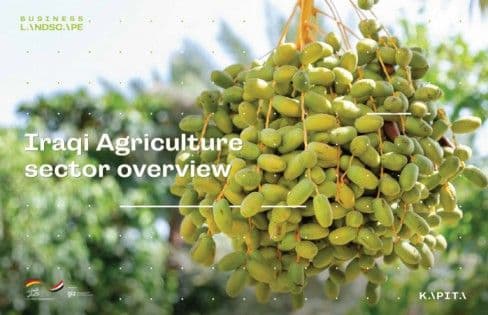
Iraqi Agriculture Sector Overview
#ICT Iraq#Human Resources#Capacity Building
September 10, 2020mujahed
This report provides an overview of Iraq's agricultural sector. It highlights the sector's vital role in the economy and employment despite oil dependence. The report details major challenges like water scarcity, salinity, and conflict impact. It also outlines government policies, strategic plans, and partner projects aimed at revitalizing agriculture, boosting food security, and diversifying the economy. Recommendations for sustainable growth are also presented. PDF
Publication Overview
September 10, 2020
This report provides an overview of Iraq's agricultural sector. It highlights the sector's vital role in the economy and employment despite oil dependence. The report details major challenges like water scarcity, salinity, and conflict impact. It also outlines government policies, strategic plans, and partner projects aimed at revitalizing agriculture, boosting food security, and diversifying the economy. Recommendations for sustainable growth are also presented. PDF
Full Content
Executive Summary
Iraq's agricultural sector is crucial for economic diversification, social stability, and poverty reduction, despite being largely oil-dependent. In 2019, agriculture contributed 5% to Iraq's GDP and employed 18% of the workforce, making it the largest private-sector employer. However, its contribution to GDP has steadily declined from 9% in 2002 to 2% in 2019, with the country increasingly relying on imports for domestic food needs. The Import Dependency Rate (IDR) rose to 76% in 2008.
Iraq's agricultural sector is crucial for economic diversification, social stability, and poverty reduction, despite being largely oil-dependent. In 2019, agriculture contributed 5% to Iraq's GDP and employed 18% of the workforce, making it the largest private-sector employer. However, its contribution to GDP has steadily declined from 9% in 2002 to 2% in 2019, with the country increasingly relying on imports for domestic food needs. The Import Dependency Rate (IDR) rose to 76% in 2008.
Historically, Mesopotamia's agriculture was foundational to its civilisation. However, in recent decades, the sector has faced significant setbacks including:
- Neglect and underinvestment from the government.
- The draining of the Mesopotamian marshes in the 1990s, causing environmental damage and impacting the livelihood of Marsh Arabs.
- Armed conflict and ISIS occupation, which destroyed farmlands, confiscated grain crops, and led to significant agricultural losses (estimated at 40% in 2016, with $200 million lost in revenue) and internal displacement of rural populations.
- Water resource issues, including inefficient irrigation systems (81.4% use surface irrigation), water waste (only 40% used by crops), contamination, and reduced water flow from the Tigris and Euphrates due to dams in neighbouring countries like Turkey.
- Increased salinity, affecting up to 70% of cultivable areas and causing 20-30% loss in irrigated areas, leading to low productivity and increased sandstorms.
- High poverty rates in rural areas (30%, double that of urban areas) and a decline in agricultural employment for both men and women.
To address these challenges, the Iraqi government and various partners have initiated several efforts:
- Government Policies and Plans:
- The National Development Plan (NDP) 2018-2022 aims to increase agriculture's GDP contribution to 5.2% by 2022 and enhance food security.
- The Ministry of Agriculture's initiative (2010-2012) purchased 4170 sprinkler irrigation systems.
- An import ban on 25 agricultural items was issued in 2019 to promote local production and achieve self-sufficiency in strategic crops like wheat, tomatoes, and potatoes. Iraq also seeks to export barley, dates, and eggplants.
- Legislation protects agricultural areas, and farmers are provided with subsidised machinery, supplies, and premium seeds.
- An agricultural meteorological network provides data for better planning and resource management.
- Recent Agricultural Projects:
Initiatives like the Imam Hussein, Abu Al-Ahrar, Alfirdous, Buckthorns, and Fadak agricultural cities/farms demonstrate efforts to transform desert soil into fertile land, combat salinity, and produce various crops and livestock, contributing to domestic needs.
- Partners' Projects:
- FAO works with the Iraqi government through the Country Programming Framework (2018-2022) to restore agricultural livelihoods in liberated areas, increase water productivity, and enhance food security, with a budget of USD 92.95 million.
- IFAD's Smallholder Agricultural Revitalization Project (2017-2025), costing USD 31.84 million, aims to improve rural livelihoods, diversify crops, and repair irrigation schemes across four provinces.
- USAID's Agribusiness INMA program (2007-2012) focused on private sector growth, job creation (14,711 jobs), and increased revenues (USD 142 million).
- The World Bank provides an additional financing loan of USD 32 million (2018-2023) for agricultural recovery in terror-impacted areas.
- The Orange Knowledge Programme (OKP) and Sustainable Development Goals Partnership (SDGP), funded by the Netherlands, promote economic diversification, sustainable agriculture, and provide training and funding for agro-food development.
Key recommendations for the future of Iraq's agricultural sector include:
- Modernising irrigation networks and introducing advanced systems like drip irrigation to reduce water waste and combat salinity.
- Implementing tariffs on water to promote rational consumption.
- Establishing international treaties for the equitable division of Tigris and Euphrates water resources.
- Restoring the marshes to revive cultivation and support indigenous communities.
- Diversifying crops, promoting horticulture, and cultivating salt-resilient and drought-tolerant crops for higher returns and better water management.
- Investing in agricultural technology, such as greenhouse and smart farming, to overcome environmental constraints and ensure year-round production.
- Supporting local production by strengthening the entire supply chain, providing market access, and developing food processing facilities.
- Improving agricultural education and research to support better planning and execution of projects.
- Encouraging private sector investment and supporting agricultural businesses and startups through incubation programs.
- Enhancing rural livelihoods by improving access to education, healthcare, and services, and empowering rural women.
- Developing the livestock sector through improved pastures, vaccinations, and establishing processing factories.
Publication Information
Publication Details
Author:mujahed
Published:September 10, 2020
Category:report
Documents:1 PDF
Tags:3
Academic Metadata
DOIkmnknmmkk
Suggested Citation
kmnknmmkk
Need Custom Research?
Contact our research team to discuss your specific research needs and objectives. We provide tailored analysis for your business.
Contact Research TeamWork with Kapita Research
Need this level of insight for your own decision?
This report is a sample of what our team produces. We run custom market research, sector deep-dives, competitor mapping, and market-entry studies for businesses and investors operating in Iraq. Tell us what you're trying to figure out — the first consultation is free.
Related Publications