Publication•March 12, 2023
free
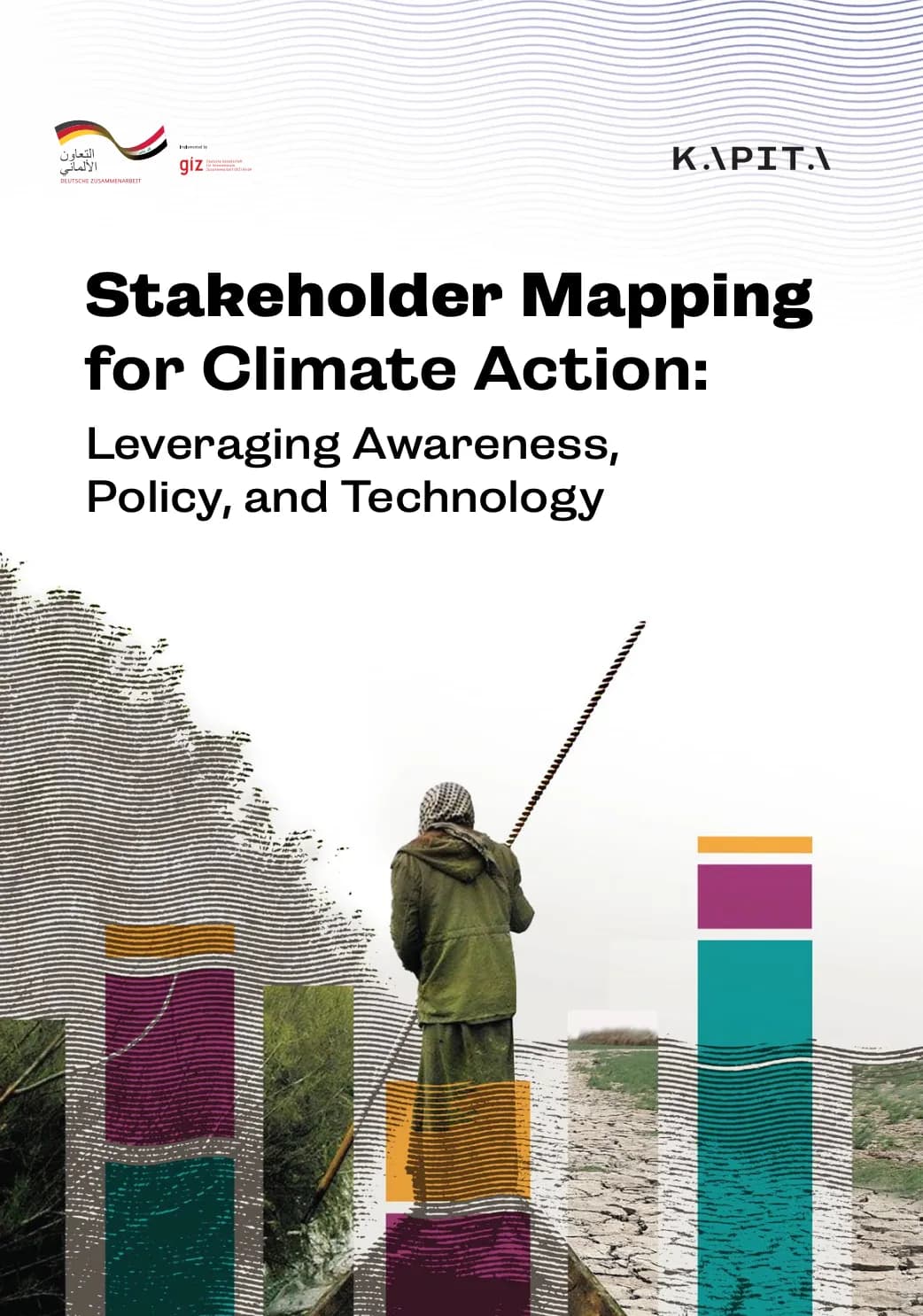
Stakeholder Mapping for Climate Action: Leveraging Awareness, Policy, and Technology
#Climate Change Iraq#Climate Policy Iraq#Stakeholder Mapping Iraq#Environmental Research Iraq
March 12, 2023Kapita Research Team
Iraq is one of the most vulnerable countries to climate change, experiencing the worst effects of the crisis while lacking readiness to face its challenges. The situation demands a concerted effort from all relevant parties to address issues related to food security, water scarcity, environmental degradation, public health, and infrastructure improvement. To catalyze transformational change in Iraq, all stakeholders, including government agencies, civil society, and the private sector, must engage in climate action.
Publication Overview
March 12, 2023
Iraq is one of the most vulnerable countries to climate change, experiencing the worst effects of the crisis while lacking readiness to face its challenges. The situation demands a concerted effort from all relevant parties to address issues related to food security, water scarcity, environmental degradation, public health, and infrastructure improvement. To catalyze transformational change in Iraq, all stakeholders, including government agencies, civil society, and the private sector, must engage in climate action.
Full Content
Executive Summary
The scoping study was carried out to create a clear image of the Iraqi stakeholder groups involved in climate change work. The analysis was conducted to pinpoint the influence level of stakeholder groups for each of the three themes of policy and decision-making, awareness and information dissemination, and technological transformation. A questionnaire form has been used as a tool to assess the influence rate of each stakeholder group in the respective themes. Major findings could be summarized as follow:
- Deriving stakeholder groups and their sectoral affiliation: List of stakeholder groups have been identified and categorized based on the role and the sector coalition which are either state or non-state. Roles have been divided into nine which eases categorizing groups and allocates the stakeholders following their catalyze. The resulting stakeholder’s tree could be a reference for setting a collaboration network for any initiatives that address climate change.
- The state sector and its partner organizations infer as primarily responsible: According to our survey, while the government bears the majority of the responsibility for combating climate change, the international community, as well as the non-state sector, exerts responsibility. Several voters have stressed the huge responsibility that comes on the governmental institutions in taking action towards climate change. Several voters have stressed the public sector’s dominant role and responsibility in tackling climate change. They further stated that in order to meet the threats posed by climate change and fulfill their intentions, all governmental institutions and pertinent parties should maximize their endeavor.
- Governmental institutions have been identified as having the most clout in policy and decision making: Ministries and government bodies have agreed to have significant influence in policy formulation and legislation. The media and local governments were cited as effective support for decision-making groups. Political parties, on the other hand, have not received a significant share of the credit for their efforts in strengthening and implementing policies and agendas related to climate change adaptation and mitigation. International organizations (e.g., UN agencies, USAID, GIZ, and many others) were fairly rated, and their efforts in this area were highlighted as entities assisting the government in improving their local frameworks.
- The media, educational institutions, and international organizations are at the forefront in disseminating information and raising awareness: The role that some stakeholders are playing is increasing public awareness of climate risk. However, escalating the fact of climate emergency is required in order to reach the entire community, particularly indigenous peoples in the most affected areas of climate change. Through active campaigns and outreach activities, the media and social movements have been identified as excellent sources of information. Whereas education aims to induce long- term behavioral changes and provide an understanding of the climate change challenge and possible solutions.
- The technological transformation is influenced by research institutions, international financial institutions, and private sector businesses: Science and technological advancements are pushing the boundaries of climate change adaptation and mitigation. Stakeholders are open to incorporating these technological changes in their particular fields of expertise. According to the participants’ perspectives, a new generational shift toward sustainable and environmentally friendly practices is being aided by green finance programs and international organizations. Private sector pioneers in adopting and developing environmental technologies could be key players in Iraq’s technological transition. State-sector entities, on the other hand, wielded considerable power in this area, as they could contribute to the adoption and implementation of alternatives to outdated deleterious technologies.
- Iraq and its emerging market require a stronger nexus between stakeholders: Iraq’s government has joined international pacts, expressing willingness to combat climate change. The current ongoing engagement between the government and the non-state sector is limited to a few programs and initiatives, still promising and can be expanded through allocating financial flows toward a climate-resilient development. Partnerships and effective engagement is the key to progress in the fight against climate change impact.
- The untapped potential of civil society in climate change actions: Civil initiatives had clearly drawn attention to climate change and the crises that Iraq is experiencing in a variety of areas. Some of the viral topics they have advocated for include heat waves, dust storms, droughts, and desertification. Many local non-governmental organizations work on climate change adaptation and mitigation, as well as the preservation of Iraq’s natural heritage. These endeavors could replenish and promote government work and programs. Engaging local voices in policy dialogue and outreach could contribute to the local authority’s aim of climate-resilient development.
Publication Information
Publication Details
Author:Kapita Research Team
Published:March 12, 2023
Category:report
Documents:1 PDF
Tags:4
Academic Metadata
Suggested Citation
Kapita Research Team. (2023). Stakeholder Mapping for Climate Action: Leveraging Awareness, Policy, and Technology. Kapita Research.
Need Custom Research?
Contact our research team to discuss your specific research needs and objectives. We provide tailored analysis for your business.
Contact Research TeamWork with Kapita Research
Need this level of insight for your own decision?
This report is a sample of what our team produces. We run custom market research, sector deep-dives, competitor mapping, and market-entry studies for businesses and investors operating in Iraq. Tell us what you're trying to figure out — the first consultation is free.
Related Publications