15•Article
Business Landscape Interview: Ahmad Fahad Al-Shagra
Ahmad Fahad Al-ShagraDecember 21, 202420 min read
Article Summary
In this interview, Mr. Ahmad Al-Shagra reflects on key stages of his career, sharing insights from his journey as an entrepreneur and the challenges of building successful startups. He shares his assessment of the EdTech scene in Iraq and also discusses his transition from education to media and entertainment. Drawing from his extensive experience, he provides a research-based assessment of the Iraqi ecosystem, identifying critical gaps in skill development
Business Landscape Interview
Ahmad Fahad Al-Shagra
Co-founder and Chief Platform Officer, 1001 Platform
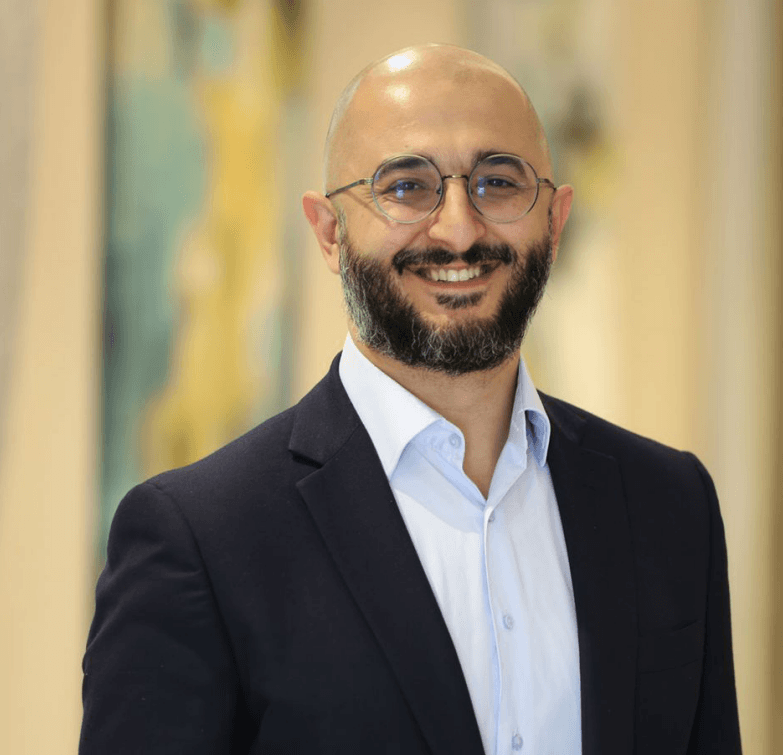
Mr. Ahmad Fahad Al-Shagra is the co-founder of 1001 Platform, an entertainment streaming service in Iraq. With a diverse professional background, he brings expertise in product management, programming, consultancy, training, mentoring, and investing. His career spans multiple industries, including educational technology, as he served as an advisor for Edlal open learning platform and Sohar University. He also worked as a mentor at Wadi Accelerator Seed Program and Flat6Labs. Among his many entrepreneurial ventures, he co-founded two EdTech platforms, Nadrus and Intajy.
In this interview, Mr. Ahmad Al-Shagra reflects on key stages of his career, sharing insights from his journey as an entrepreneur and the challenges of building successful startups. He shares his assessment of the EdTech scene in Iraq and also discusses his transition from education to media and entertainment. Drawing from his extensive experience, he provides a research-based assessment of the Iraqi ecosystem, identifying critical gaps in skill development. He also emphasizes the importance of shifting both attitude and mindset to build an ecosystem that fosters growth and innovation. He shares his views on investment and funding, highlighting the need for investors to bring not only financial support but also expertise, leadership, and meaningful mentorship to the startups they decide to back. Additionally, he highlights the need for stronger collaboration between universities and the private sector to build a workforce equipped for Iraq’s evolving economy and calls for incubators and funding entities to move beyond surface-level efforts to deliver meaningful value to startups and build a solid foundation for Iraq’s digital transformation.
Could you share a glimpse of your career journey with us?
My career has taken many unexpected turns. In 2003, due to the war in Iraq, we were forced to leave for Syria, thinking we would return shortly, but many of my family members remain abroad to this day. At that time, I was a third-year student at the University of Baghdad, and I had to postpone my studies. A year later, I re-enrolled at a university in Syria and graduated in 2007.
In 2005, I started working in an internet café with a partner who was a computer science graduate. At the time, my main goal was not to earn money but to access the internet for free. Over time, we became business partners and transformed the café into a point-to-point internet service provider. We implemented a metropolitan area network to serve nearby buildings and set up media servers that offered subscription-based media services. Unfortunately, due to personal circumstances, we had to close the business in 2007. This experience gave me valuable insights into how technology drives scalability, the limitations imposed by physical constraints, and the mechanisms of subscription-based business models.
I have always been passionate about entrepreneurship and have read extensively on the subject. In addition to my experience in business, I am a computer systems engineer and learned some coding at an early age. Since leaving Iraq, I realized that I needed a skill set that would allow me to work from anywhere in the world, and programming was the most reliable option.
After graduation, I explored various career paths. I taught at university for a while but quickly realized it was not the right fit for me. Later, I joined a company called Business Optimization Consultants (BOC), which was owned by Ronaldo Mouchawar, the founder of Souq.com. Along with Rami Farah, the technical director at the time, Mouchawar sold Souq.com to Amazon for $580 million. Working with them introduced me to the concept of product management, which was not yet popular. Mouchawar and Farah saw potential in me as someone who understood programming, design, public speaking, and project management, which aligned with their vision of a product manager. We worked on a low-cost search engine project, which taught me what it means to create a product and align designers, engineers, and market needs to achieve product-market fit. This experience motivated me to pursue my own entrepreneurial journey.
Between 2010 and 2011, I focused on building an investor network to support my next startup. During that period, I became an editor for The Next Web, which was the third-largest technology blog in the world, covering the Middle East. This role allowed me to connect with investors and build relationships across the region. I developed my first product in 2012, which failed, followed by a second attempt in 2013 that also did not succeed.
In addition, I held various roles as a trainer and programmer between 2007 and 2014. In 2013, I became an enterprise architect, training government employees in different countries to develop their digital infrastructure. I also helped the company I worked for establish branches in Iraq and other countries. These experiences made me eventually realize the importance of stepping back from all those different commitments to gain a deeper understanding of the market before attempting to build my own product.
In 2014, I co-founded Nadrus.com, an online learning and teaching platform whose name means “We Study” in Arabic. After three years of hard work, we had a successful exit in 2017-2018. At its peak, Nadrus.com was one of the largest online skill development platforms in the region. Recognizing the need for more Arabic-language educational content, we launched Intajy, meaning “My Production” in Arabic, in 2018. Within a year, the platform generated $8 million in revenue. Furthermore, I have been actively involved with accelerators, incubators, and investment programs since 2018. I had the privilege of being part of the Wadi Accelerator in Oman and served on advisory committees for Flat6Labs accelerators in Bahrain and Lebanon, where I mentored startups and advised investees.
The COVID-19 pandemic then reshaped the e-learning industry in ways no one could have predicted. Instead of the expected 4 fold growth, we experienced 400 times growth. With a limited staff, we worked 16 to 18 hours a day, six days a week. However, this intense workload took a toll on my health, and I had to step back, passing leadership to my partner. I then took a year off to explore different aspects of life, immersing myself in reading philosophy, religion, and psychology and even began writing a book.
At the start of 2022, I began traveling to Baghdad regularly to understand the Iraqi market better, preparing for my return. After living in Muscat, Oman, for 14 years, I felt it was time to reconnect with Iraq. By mid-2022, I took on leadership roles in emerging businesses across Iraq. Some projects had potential but lacked effective management, while others had good leadership but needed the right skills to succeed. Eventually, the opportunity to join 1001 platform came along. I was drawn to the business concept, the team behind it, and the potential impact we could create, which motivated me to shift my focus to this new venture.
When you returned to Iraq during COVID-19, the educational technology sector was booming. Given your extensive experience, why didn't you launch your own EdTech startup?
I had numerous opportunities in the EdTech sector through regional and local partners and players. However, after working in education for over a decade, I felt that I had reached the limits of what I could learn and achieve. Continuing down the same path would have kept me in my comfort zone, and unless an extraordinary EdTech opportunity presented itself—one where I could make a meaningful impact—it did not feel worth pursuing. That opportunity never came.
When the opportunity to join 1001 emerged, I found myself driven by curiosity and excited by the potential to create meaningful change in the media and entertainment industry. The new challenges and the chance to make an impact in a completely different sector motivated me to make the shift.
What encouraged you to enter the Iraqi entertainment sector despite knowing it was mainly plagued by piracy and lacked proper regulations?
When we assess a market, we try to predict how it will evolve over time. The Iraqi ecosystem appears to be moving evidently toward legalization and stronger enforcement of intellectual property rights. Our hypothesis was that Iraq would transition from a reliance on pirated content to embracing legal content within the next two to five years.
To establish a strong foothold in the market, we need to succeed in positioning ourselves early. This requires significant effort, but it is crucial to enter the market before it becomes fully legalized so that we can take advantage of the transition as it unfolds. Once the market stabilizes with strict legal frameworks in place, the window of opportunity will be closed. In other words, we deliberately enter the market when it is muddy, and we start running when it is dry.
How do you perceive the EdTech scene in Iraq?
There are two key dimensions to understanding the EdTech scene in Iraq. The first is that Iraq is part of a larger, interconnected world. Isolating Iraq from the regional market is not always the best approach. With a population of around 45 million, Iraq makes up less than 10% of the Arab world’s 450 million people. This is not a particularly large market on its own, which means we are inevitably influenced by the broader Arab market. This influence is evident in the entry of regional startups like Abwaab and Classera into the Iraqi market. However, the number of educational startups specifically tailored to Iraq’s unique needs remains very limited.
The second dimension involves the distinction between two types of education: pedagogy and andragogy. Pedagogy refers to the teaching of children, while andragogy focuses on facilitating learning for adults who are self-directed learners. Most of the EdTech platforms currently available in Iraq provide enabling technologies, but they are non-disruptive. In practice, these platforms primarily help students improve their grades and pass exams, which may impact private tutoring centers to some extent. However, they largely overlook vocational training, a critical area that remains underserved.
Interestingly, the concept of training centers—while diminishing globally—still holds relevance in Iraq. Many university students are now seeking out these centers to acquire additional skills. This suggests that vocational education remains a green field in Iraq, presenting untapped opportunities.
Furthermore, the concept of blended learning platforms has yet to emerge in Iraq. This sector is still in its early stages, making it a prenatal market with tremendous potential. The number of opportunities is vast, with estimates suggesting a market value worth hundreds of millions of dollars.
Does this perspective about Iraq not being isolated from the regional and global context apply to the media sector as well?
Absolutely. It applies to every sector. In our work, we often refer to a military analogy called "The Normandy Strategy." During the Second World War, when the Allied Forces planned to get back to Europe, they chose the Normandy region in France for their landing operations. Normandy was strategically surrounded by mountains, shielded from land and air attacks, and could not be easily conquered by German tanks.
We apply the same concept in business. The idea is to begin by targeting a small, well-defined market—one that we can dominate and use as a foundation. This strategy allows us to establish a strong foothold before larger competitors, like Netflix or Disney, enter the scene. By the time these giants shift their focus to the same market, we have already grown to a size that enables us to compete effectively and begin expanding into broader markets.
The goal is to achieve product-market fit in a market we know well, such as Iraq, and then leverage that success to move into regional markets.
How do you assess the growth of the startup ecosystem in Iraq over the past few years? Can we confidently say we have an Iraqi ecosystem?
What I am about to share is not based on my personal opinion but is informed by research that I agree with. I had the privilege of working with multiple governments in the region to help develop their ecosystems, which has given me valuable insights into this topic.
The term “ecosystem” refers to any environment that provides the essential elements needed for growth. An ecosystem can either foster growth or hinder it. In Iraq, we do have an ecosystem, but the key question is whether it nurtures growth or limits it. One of the best frameworks I have encountered on this subject comes from the book “The Rainforest: The Secret to Building the Next Silicon Valley” by Victor H. Hwang and Greg Horowitt. They outline eight core elements of a thriving ecosystem:
- Diversity of actors: This includes investors, entrepreneurs, mentors, universities, and government entities.
- Trust in social norms: In places like Silicon Valley, people do not shame failure; they openly share their ideas and feedback.
- Effective networks: The presence of networks and "super nodes" that allow for the seamless flow of information.
- Risk-taking and failure tolerance: While there is risk-taking in Iraq, there is still limited tolerance for failure.
- Access to resources and talent: Availability of talent, infrastructure, and technology is essential to build a strong ecosystem.
- Leadership and vision: Effective leadership is essential—those who champion the ecosystem must have a clear vision and the ability to mobilize stakeholders.
- Openness to innovation: The environment must welcome new ideas and encourage innovation in various fields.
- Talent development and education: Educational institutions must offer opportunities to develop the skills needed to sustain the flow of talent into the ecosystem.
These elements define a strong ecosystem, and I believe the most critical focus should be on mindset, not money. Oddly enough, Iraq has plenty of financial resources, but what we lack is the right attitude. We need to actively promote success stories to inspire others, and both cultural and regulatory attitudes must evolve. Many of the laws we currently enforce are inherited from outdated systems and do not align with the demands of today’s challenges.
To return to the original question—yes, we do have an ecosystem in Iraq, and it does provide some opportunities for growth. However, there is significant room for improvement. It is everyone’s responsibility, including mine, to contribute to this improvement and ensure the ecosystem reaches its full potential.
Besides laws and regulations, what other aspects of the entertainment industry can we collectively improve?
When it comes to building highly skilled, technology-driven, and profitable businesses or startups, one of the most important aspects is creating an effective network. Strong networks facilitate collaboration and support, which are essential for sustainable growth. Another area within our reach is fostering greater risk-taking and tolerance for failure. For instance, the government could introduce a million-dollar competition to encourage entrepreneurs with scalable ideas, stimulating innovation through bold initiatives.
Furthermore, building trust in social norms is equally critical. This means creating an environment where mentors and startups can meet to exchange advice and knowledge. This can be achieved through simple efforts, such as organizing gatherings where mentors openly share their insights with those who need them. Universities also have a significant role to play in shaping the future workforce. Currently, universities are not sufficiently integrated with the private sector’s employment needs. Private companies actively seek talent, but we still cannot rely on universities to provide job-ready graduates. If universities take a more proactive approach by engaging with the private sector and becoming innovation hubs, it would have a transformative impact on the market.
Although Iraq is making progress, the current pace does not align with the scale of challenges we face. We need to accelerate momentum. The next three to five years present a crucial opportunity to bridge key gaps in skill sets, particularly in areas like design and product engineering. Developing these competencies will provide the ecosystem with valuable local talent, which in turn will attract significant investment. At the moment, much of the investment is directed toward foreign talent rather than Iraqi professionals.
Despite the challenges, many Iraqi entities are already doing remarkable work. For example, the Ministry of Foreign Affairs has made strides in digitalizing its processes, and the Ministry of Health now uses GPS tracking systems to enhance operations. Additionally, the recent reduction in waste collection inefficiencies in Baghdad, driven by the technology of an Iraqi innovator, demonstrates that innovation is already solving real-world problems. These successes highlight that Iraq has the potential to overcome current obstacles and create a thriving ecosystem if we continue to build on these achievements.
You mentioned that Iraq does not lack capital but rather lacks mindset and attitude. If so, why do startups still list funding as their biggest challenge?
I believe there are three main reasons for this. First, many startups struggle to communicate effectively with venture capitalists because they do not use the language that resonates with investors. Founders often fail to present their ideas in the way venture capitalists expect, which makes it difficult for them to attract funding.
Second, although there is regional interest in Iraq, the country still lacks a sufficient presence of local venture capital (VC). Venture capital is essential for driving high-risk technological innovation, and its absence creates a significant gap in the funding landscape.
Third, many of the individuals attempting to work in venture capital in Iraq lack a deep understanding of it, with only a handful of exceptions. Those establishing innovation funds often have little to no firsthand experience with either innovation or investment. They have not sat on either side of the table—as founders or as investors—which limits their ability to guide startups effectively.
Someone who has experienced multiple failures might be skilled at teaching others how to handle failure, but they are less likely to provide insights on achieving success. In contrast, someone with a successful track record as an innovator who transitions to investing can offer valuable expertise, guidance, and meaningful support. Ultimately, what Iraq needs is intelligent and patient capital—an investment is not only financial but should also be accompanied by knowledge and strategic support.
What is your assessment of Iraqi founders based on your experience with startup pitches and the Iraqi Angel Investor Network (IAIN)? What do they need to secure investment, and have you personally invested in any startups?
I have invested in Iraqi startups but not through IAIN yet. I think many startups need a clearer understanding of what it truly means to be a “startup.” One key concept that is often overlooked is scalability. By definition, a startup is a highly scalable, technology-driven organization that is either profitable or has the potential to become profitable.
Startups in Iraq should adopt what I referred to earlier as the “Normandy Strategy.” They should treat Iraq as their beachhead market—a starting point rather than the final destination. Iraq does not need to be the ultimate goal for most startups. Their ambitions should extend beyond a specific city or market and aim for broader horizons, both in terms of scope and time.
Another crucial factor is the role of technology. Technology is the foundation of any successful startup. If an entrepreneur lacks the necessary technical skills, they should seriously reconsider launching their venture or find a way to acquire that expertise.
Unfortunately, many Iraqi startups lack at least one of these critical elements—scalability, technology, or profitability. As an angel investor, I would not accept a pitch if these three elements were missing.
Do you believe that Iraq is going through an actual digital transformation? Why or why not?
In my opinion, digital transformation is indeed happening in Iraq, and it is tangible. I also believe that any economy or culture undergoing transformation moves through two distinct phases: the educational phase and the execution phase.
Currently, Iraq is in the educational phase. Bureaucrats, private sector stakeholders, and university students are becoming familiar with the concept, hearing the term repeatedly. This phase is crucial because educating the market is a necessary step that cannot be skipped. While digital transformation is well-established in other parts of the world, the approach and methodology in Iraq are still evolving as we are in the early stages. However, we hope to see a higher level of maturity in the near future.
It is important to note that the term "digital transformation" is often driven by government initiatives. However, digital transformation should be a comprehensive, holistic process. Iraq is well-positioned for this transformation, especially given the country's high penetration of smartphones. We have reached a point where both the government and private sector can start developing business models and offering services that leverage this digital footprint. Every business model that relies on a digital platform contributes to Iraq’s digital transformation journey.
Does Iraq have what it takes to undergo a serious digital transformation?
To answer this question, we need to revisit the original question about the Iraqi ecosystem. A successful digital transformation relies heavily on technologists who can build digital services. Without enough skilled technologists, Iraq’s transformation will be slower and more expensive, as we will be forced to outsource talent that may not fully align with the local context or needs.
There are eight essential elements required for a successful ecosystem, as stated in my previous answer. The same applies to digital transformation, with youth capacity and skill development being among the most critical elements. Universities play a pivotal role in transferring knowledge and practical experience, while incubators are equally important. An incubator that fails to produce successful startups does more than just miss its mark—it undermines the aspirations of other incubatees, indicating that essential ingredients for success were not provided to the startup founders. Unfortunately, Iraq has yet to see a significant success story emerge from any of its incubators or accelerators, which is a clear indicator of the current challenges.
However, it is worth noting that the challenges we face are not unique to Iraq. Even in other countries, university-based incubators, for example, do not always deliver great results. In most cases, academia ends up producing more papers than establishing startups.
What needs to change in incubators and accelerators to stop them from killing the dreams of entrepreneurs in Iraq?
Those entrepreneurial support programs lack people who have been on both sides of the table. Simply put, you cannot offer what you do not possess. It is not a complex equation. To illustrate, someone with expertise in building retail stores can only transfer that knowledge to those startup founders—they can build more stores, not startups. That is the reality we face today. What surprises me is not this limitation but rather the unrealistic expectation that someone skilled at opening fuel stations, for example, could also launch rockets. Without the right expertise, we risk creating more of the same—just more fuel stations—rather than fostering innovation and ambitious ventures.
Where are we heading as an ecosystem in the next five years? Can we identify certain trends?
Historically, I have not been very good at predicting the future. Given that disclaimer, I believe in the next three to five years, we will witness at least three success stories, with company valuations exceeding $50 to $100 million across different sectors. Hopefully, one of these will emerge from the media industry. We also see promising developments in other sectors, particularly in financial technology.
I hope educational and academic institutions will improve in preparing graduates for the job market. While they are making efforts, from my perspective in the field of technology and innovation, their contribution to the ecosystem could be more impactful. To be fair, it may not be entirely their responsibility to prepare students for the job market, and we should acknowledge the work they are doing. Nevertheless, the problem arises when institutions consistently fail to produce graduates who are ready for the market's demands—this creates a serious gap.
Some universities, such as the University of Technology in Baghdad, have branded themselves as equipping graduates with technological expertise. Unfortunately, they have not yet achieved that, which is unfortunate. Creating this success story again is feasible, as they have achieved this before. Universities such as the University of Technology, Al-Nahrain University, the University of Baghdad, Al-Turath University College, and Al-Mansour University College have a track record of graduating individuals who became leaders in Iraq’s telecommunications sector, building it from the ground up in ways no one else has accomplished. They have done this before, and it is time for them to rise to the challenge once again.
Before we conclude, we would love to know what is product management and why is it essential?
Product management is the skill of making three fundamental decisions: which features to create, which features to keep, and which features to kill in any digital product. These decisions are the core competencies that every product management professional must master.
During the implementation process, product management involves deciding which user interface to present, the sequence in which features appear, and the reasoning behind placing specific elements in certain locations—along with many other choices. This process captures the essence of product management, design, and development.
Why is product design important? It is vital because innovators are more like orchestra conductors than composers or performers. If we examine some of the most impactful products in recent history, we see individuals like Bill Gates, Steve Jobs, and Elon Musk. For example, although not a traditional designer, Steve Jobs was actively involved in design and coding, understanding the narrative his product needed to tell and the experience it could enable for users.
Every individual has a story, and great products empower users to express their stories. Take the example of ride-hailing services. If someone wants to go out late at night and cannot get a ride from family, a company like Careem addresses this need. Their platform not only offers convenient rides but also ensures safety through features like real-time ride tracking, allowing users to share their journey with family members. They also thoroughly vet their drivers to provide an added layer of security.
It is also important to acknowledge Karwa, an Iraqi ride-hailing company that introduced these safety features before Careem entered the market. Careem succeeded in reconnecting Iraqi families to their services by tapping into an already existing narrative within Iraqi culture.
Ultimately, product management revolves around creating, keeping, and killing features while understanding the user’s narrative. The goal is to design products that empower users by enabling their stories and providing meaningful outcomes.
Article Information
Details
- Author:Ahmad Fahad Al-Shagra
- Published:December 21, 2024
- Issue:15
- Read Time:20 min
Need Custom Analysis?
Contact our research team to discuss your specific business landscape analysis needs.
Contact UsMore from 15