14•Article
Business Landscape Interview
Mustafa SalamSeptember 21, 202420 min read
Article Summary
In this interview, Mr. Salam shares his journey of entrepreneurship and innovation within Iraq's education sector. He delves into how the Finnish educational experience has shaped the development of the Corrsy platform and its broader impact on Iraqi education. He also discusses the challenges faced in the education sector, such as the delivery of quality education, costs, learning outcomes, and the lack of collaboration. Furthermore, Mr. Salam offers insights into the Iraqi ecosystem and the investment landscape and concludes with Corrsy's future plans.
Business Landscape Interview
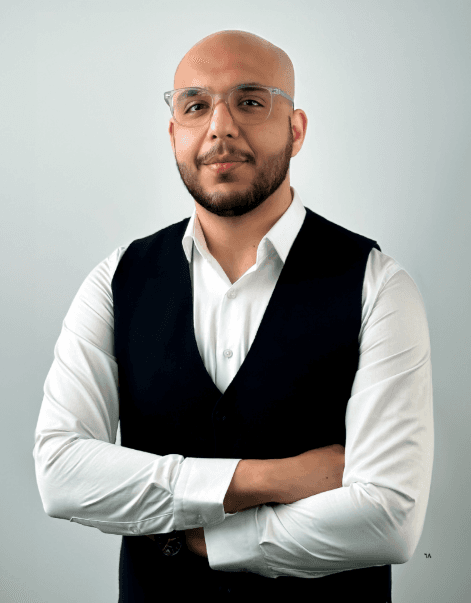
Mustafa Salam
Co-founder and CEO, Corrsy
Mr. Mustafa Salam is an entrepreneur with a background in engineering and business. After earning a Bachelor's degree in Transportation and Highway Engineering from Al-Mustansiriyah University, Mr. Salam migrated to Finland and established his first startup there working to address the employment challenges for refugees. His entrepreneurial ventures helped him gain business skills and knowledge and develop an understanding of different markets.
In 2020, he founded Corrsy, a platform that provides official educational content through modern technology and gamification.
In this interview, Mr. Salam shares his journey of entrepreneurship and innovation within Iraq's education sector. He delves into how the Finnish educational experience has shaped the development of the Corrsy platform and its broader impact on Iraqi education. He also discusses the challenges faced in the education sector, such as the delivery of quality education, costs, learning outcomes, and the lack of collaboration. Furthermore, Mr. Salam offers insights into the Iraqi ecosystem and the investment landscape and concludes with Corrsy's future plans.
We would love to know more about you and your background.
My name is Mustafa Salam. I was born, raised, and educated in Iraq. I am one of the many Iraqis who had to endure the difficult circumstances before and after 2003. In 2015, I left Iraq and moved to Finland as an Iraqi refugee, where I helped to found a social impact business called Startup Refugees. The organization offered training to refugees arriving in Finland and addressed the employment challenges that migrants face. The average time it took for a migrant to find a job in Finland was six years. With the model we built, we reduced the job search time to 9 months. This work environment opened a totally new horizon for me. It helped me to make connections with major companies and key players in Finland and taught me how to build a startup.
Consequently, I engaged in different business ventures in Finland and initiated several projects across Europe. We also worked on initiatives related to migrants in Iraq and Jordan, supporting those migrating to Europe but also the ones returning back to their countries of origin. The scope of our work included providing employment opportunities, enabling refugees to start their own businesses, or equipping them with the necessary skills to enter the labor market. Over time, the organization grew, and the support extended to thousands of migrants. In four years, I had the opportunity to do everything from practical, hands-on tasks to leading the organization. Two factors pushed me forward. The first is my entrepreneurial spirit. It has always been in my nature. I even owned an internet tower in 2007 when the internet was still in its infancy in Iraq. The second is my passion for a good quality education. Therefore, I feel the need to give back to the Iraqi community by focusing on education and entrepreneurship. We started by entering the Iraqi education sector. Since Finland has the best education system, we analyzed the Finnish educational principles and the challenges of Iraqi education. We began to customize both to build a product that fits the Iraqi education system.
Through an in-depth study of Iraqi education, we found that Iraqi students study under psychological pressure from society and their families to achieve the highest grades possible in final exams. In doing so, students often turn to private tutoring. Private tutors usually tend to simplify the material as much as possible and encourage memorization over learning. As a result, tutors devised tips and tricks to help students memorize and find solutions. Every year, we have graduates with high grades who significantly lack the job market skill requirements, such as critical thinking, problem-solving, and communication. Moreover, when teachers find the shortest and fastest ways to memorize and pass exams, demand for these private lessons increases, and costs skyrocket. Private tutoring has become expensive, and schools, on the other hand, demand high success rates from students. The downside here is that many young people today leave school and enter the labor market at an early age because education does not provide opportunities for skill development or future employment. To address this challenge, we created the Corrsy platform, which helps students overcome these challenges and receive a high-quality education.
Could you tell us about the Corrsy’s business model?
The cost of private tutoring has become very expensive for Iraqi students, reaching up to one million Iraqi dinars per subject. Additionally, learning outcomes are not tangible because students study primarily to pass and get high grades rather than to learn and acquire new skills. Therefore, with the Corrsy platform, we wanted to reintroduce these rigid study materials in a way that helps students learn, pass, and enjoy studying. We applied three key principles from the Finnish education system: first, learning through games, where the application provides competition among students and a points system; second, micro-learning, which aims to break down large lessons into smaller, shorter segments to help students digest the material easily and in less time; and third, storytelling, which helps students better comprehend the material.
Thus, the platform offers these educational materials in a concise manner that encourages competition and point collection at prices that are 15 times lower than our closest competitor in this field. For example, all lessons are offered for 100,000 Iraqi dinars, while our closest competitor offers the entire curriculum for one million Iraqi dinars. To expand our reach and make learning more accessible to all different socioeconomic classes, we will soon launch an installment payment system.
Aside from providing a fun learning experience to users. Is Corrsy’s system adequate to help students pass their exams with high grades?
The Finnish education system focuses on learning, while the Iraqi education system focuses on passing exams. At Corrsy Platform, we combine both approaches, which help students learn both the material and the necessary skills while also achieving high grades. At Corrsy Platform, we seek to deliver three objectives with any content we provide: success, learning, and enjoyment.
However, building trust with the audience, especially with twelfth-grade students, is not an easy task. One of the challenges is that players in the education technology sector are promoting private tutoring and celebrity teachers, which is logical in the business arena. Gaining the trust of students is a challenge that requires raising awareness for both students and their parents.
Students have realized the importance of learning in recent years, particularly as opportunities for employment, especially in medical fields, have diminished. For example, ten years ago, it was uncommon for doctors to move into the private sector and start their businesses outside the medical field. Today, doctors from various specialties engage in non-medical businesses and work in different fields. This shift suggests that students' perceptions of the health sector and public employment have changed significantly. Therefore, I believe that change from within is stronger and has a greater impact than external influence has. The change is already happening in Iraqi society from within the people themselves, while we are encouraging it from outside.
You mentioned earlier that we all have an entrepreneurial spirit within us. Do you believe that entrepreneurship can be taught?
Knowledge in general, is available through search engines, YouTube, and ChatGPT, but social skills and mindset are different. Our role as educators and education advocates is to plant these seeds in this generation and the generations to come. Every day, we learn something new, whether it is a work-related skill or a social skill. At Corrsy, we promote and build social skills and mindsets as a foundation for learning new skills and developing oneself.
At Corrsy, we aim to develop a problem-solving mindset, which helps our students overcome and navigate daily challenges in both work and personal life. Additionally, communication skills are crucial as they help us convey our ideas to others and understand others' ideas effectively and accurately. The current educational curriculum is actually designed to develop such skills, yet the focus tends to be solely on getting high grades.
On the other hand, most Iraqi students study and prepare for exams just the day before. To achieve satisfactory results in a short time, they are forced to think like entrepreneurs to find practical solutions. In my opinion, this behavior, success without actual understanding, is a skill in itself. Moreover, the deadlines, exams, and assignments, especially final exams in the twelfth grade, push students to organize their resources and time to reach their goals. This means that they are entrepreneurs without even realizing it!
As for entrepreneurship itself, I do not believe it can be fully taught because, at its core, entrepreneurship is a mindset. But I hope we can eventually provide and teach all essential entrepreneurial skills. Unfortunately, the Iraqi education system does not emphasize the fundamentals of entrepreneurship, such as financial management and networking. Finland is considered one of the most successful countries in education, and the reason for this success is its reliance on teamwork in lessons and assignments. This helps students find the best and quickest solutions to reach their goals. We lack teamwork, and it significantly contributes to our decline.
Where does the Corrsy Platform stand in terms of AI technology, and how do you intend to leverage it to add value for your students?
Today, when we talk about AI and AI technology, we recognize that any technology available to help us improve our processes and enhance our services will be integrated into our platform and system. To be realistic and honest, we have not yet integrated any AI applications into our system. Many players in the edtech sector have claimed to use AI to attract investors. At Corrsy, we definitely want to leverage AI. However, the question remains: will this technology provide all the solutions to the challenges we face in the education sector? The answer is simply no.
We are currently addressing psychological and social issues, as well as student behaviors. We have used AI to simplify and reduce the steps in our processes. For example, we used AI techniques to reduce the time needed to segment, classify, and reshape the Iraqi curriculum, which is ultimately reviewed by Finnish educational experts at Corrsy, to create the final educational content. With AI, the processes went from two weeks to two days.
One of the principles of Finnish education is focusing on teaching the individual rather than the group. Our ambition is for Corrsy to become a super tutor that students can communicate with, receive recommendations from, and enhance their educational performance. We can utilize AI to improve study outcomes and personalize teaching methods since students learn differently based on their needs and learning styles.
Corrsy closed a $500,000 pre-seed investment round. How was your experience in securing this round?
As an individual and founder of Corrsy, my ambition is to bring the Finnish educational experience to the MENA Region, particularly Iraq. Finnish experts cannot transfer education alone. A mediator with Finnish expertise and knowledge of the Iraqi context is the key to transferring the Finnish experience to Iraq. That is where we see the role of Corrsy’s team come into the picture.
I have learned a lot about Iraq’s ecosystem throughout my journey. Iraq is a nascent country in terms of investment, and the startup scene in Iraq is not very popular worldwide, which poses significant challenges to us and everyone operating in it. Despite the numerous business opportunities in the market, we still lack the skills to market ourselves, and only a few are taking the initiative to seize them. The pool of entrepreneurs and investors who are interested in venturing into the technology field is limited. An ecosystem is built only when we have enough success stories.
Other challenges include the lack of understanding from foreign investors about Iraq, which eliminates potential investment opportunities for the country. We tend to channel our focus in a certain direction as we pay more attention to outward marketing while we neglect inward marketing. We also focus primarily on app creation, leaving behind a wealth of profitable hardware business ideas that can be incubated and nurtured to become successful manufacturing companies.
In this investment round, I was not only looking for financial support but also for mentorship and guidance. EQIQ saw the potential of our business and believed in our goal as an educational platform, which was a stepping stone towards securing this round. Additionally, we secured investment from a leading figure in Finland who has multiple investments in the education technology field around the world. Lastly, we approached an angel investor who deeply believes that education can bring change to the world.
The reputation and expertise of EQIQ in the Iraqi market, along with the knowledge of leading Finnish investors and the support of the angel investor, brought us more benefits than just pure cash. I am confident about Corrsy's future. Today, we have 500,000 Iraqi students registered on our platform, and the traction rate is very high. In 2023, we achieved ten times what we had in the previous year, and the same growth is expected for this year. This is definitely helping us navigate the Iraqi market and bringing us closer to our customers.
How does Corrsy perceive the current state of partnerships and collaborations in the ecosystem?
At Corrsy, we are open to cooperating with other players within the ecosystem. In fact, we often approach many of these players to build partnerships. In most cases, these partnerships do not see the light. Iraqi ecosystem players prefer to operate alone, and therefore, they lack teamwork and a collaborative spirit. Change is a product of a collective effort of all players in the scene, not individual initiatives that exclude others. Corrsy does not challenge or compete with anyone in the Iraqi market because the market is vast and rich, and there is room for everyone. At Corrsy, we aspire to take part in an active ecosystem where everyone plays a role. This will benefit the end-users as well as the players involved. The way to grow together is through sharing knowledge and skills among ourselves.
What are Corrsy’s plans for the future?
What we are doing at Corrsy is something different and new. Our vision at Corrsy is to provide high-quality education, success, and enjoyment to anyone with a phone and internet access. Everything we do aligns with this goal. We approach the market from different angles. In Iraq, the capability to build a fully-fledged educational app from scratch in a short time is almost non-existent. The modern technologies we have developed are offered as licenses to educational institutes and tutoring centers. Today, institutes can develop their own app with its own customized branding from Corrsy’s platform. We have established excellent cooperation with ecosystem players in Iraq. Our goal is to build an ecosystem that facilitates access to education and payment processes in Iraq. From our product perspective, we have completed about 15% of the learning experience, and more is coming in the future. By the end of the year, we will announce more educational games, quizzes, and new features. As for our long-term goals, we are building our business to solve a regional problem, not only the Iraqi problem. Thus, we are planning to enter new markets next year.
Article Information
Details
- Author:Mustafa Salam
- Published:September 21, 2024
- Issue:14
- Read Time:20 min
Need Custom Analysis?
Contact our research team to discuss your specific business landscape analysis needs.
Contact UsMore from 14