13•Article
Business LANDSCAPE Interview
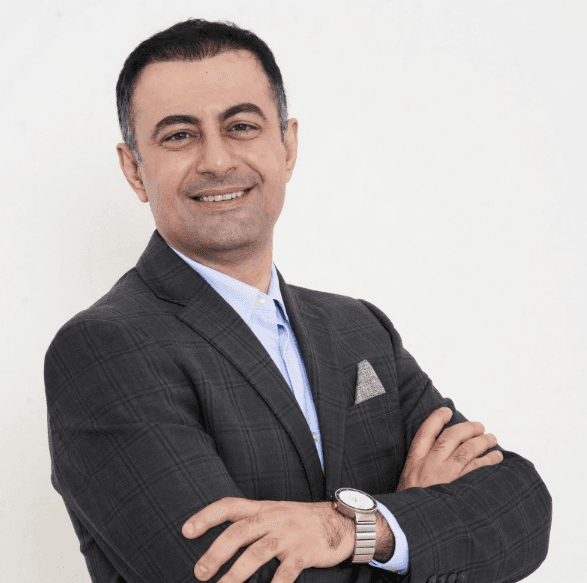
Ahmed Al-Musawi Founder and CEO, SindibadSeptember 21, 202510 min read
Article Summary
This interview features the founder of Sindibad, Iraq’s first travel booking platform. Ahmed shares his entrepreneurial journey from multimedia production to tech-based startups and finally the travel industry. He explains how Sindibad solves Iraq’s travel booking challenges, provides digital access to Iraqi Airways tickets, and offers multiple payment methods. He also outlines expansion plans (hotel booking, visas, Gulf countries), trends in Iraq’s tourism sector, challenges with infrastructure and regulations, and Sindibad’s contribution to Iraq’s digital economy.
Mr. Ahmed Al-Musawi is the founder and CEO of Sindibad, the pioneering Iraqi travel booking platform that aims to make the travel experience accessible and seamless. Mr. Al-Musawi started his career at the young age of 11 and worked in multiple areas in the multimedia production industry with a passion for graphic design. He founded his first company in Iraq, Sunland Media Agency, in 2016. He also founded DEGOLAX Multimedia Agency in Basra in 2019. He then shifted to the tourism and travel industry, driven by his passion for solving problems. In this Interview, Mr. Al-Musawi shares Sindibad's creation journey, his drive for innovation, and Sindibad’s future expansion plans. He discusses the Iraqi tourism and travel sector, challenges, potential growth opportunities, the latest trends, and the most popular travel destinations for Iraqis. He also emphasizes the importance of tourism culture and the role of tourism in the country's digital economy.
Can we start with a brief background about yourself?
My journey began at a young age. I started working in graphic design at the age of eleven, coming from a family interested in art and literature. At thirteen, with my school principal's help, I began my first job in media production, which revolved around designing and printing brand logos. Due to my lack of experience back then, I relied on external sources for assistance. Afterward, as my knowledge grew, the world of photography and production opened up to me, and I started a multimedia production business, working extensively with multiple channels and on advertisements for international clients outside of Iraq. Then, in 2016, I returned to my home country, driven by a desire to contribute to developing the country's business landscape and focused on advertising in Iraq. Working on changing and improving the logo design of our travel agency client led me to start learning about User Interface (UI) and User Experience (UX). My significant career shift was in 2018. I entered the fascinating world of entrepreneurship and startups and learned about business management, finance, and the technology upon which these startups are built. Throughout this time, I was enthusiastic about discovering new things. I always enjoyed solving problems and coming up with ideas that positively impacted people's lives. The provision of these services brought me more satisfaction than media production could ever do. Despite facing many challenges and occasional failures, I decided to specialize in the transportation sector. I formed a team, met investors throughout this journey, and conducted market research. Ultimately, this journey led me to explore the exciting possibilities within the travel industry, culminating in the creation of Sindibad.
What motivated you to enter the travel industry in Iraq?
The travel industry in Iraq is built on personal views. This means that decisions are often made based on personal opinions without much consideration for alternative viewpoints, insights, or input from others. The problems and challenges I faced in the years operating in this sector motivated me to search for suitable solutions. Issues associated with traveling, booking, and ticketing have always been there, and they require clear and intuitive solutions. For example, the lack of electronic payment in Iraq was a major incentive for us to start working on this issue, search for appropriate solutions, and learn from others' failures. This is how the Sindibad application was born. Three people started Sindibad. We started the programming phase around September 2020. A few months passed, and we had a nearly complete application. At that time, the application had only 50% of the flights that were in demand in the market. Regardless, we marketed and launched the application to the public. It is important to mention that when developing the application, we primarily relied on the needs and feedback of our customers. The first Sindibad customer was in early 2021. Our mission at Sindibad is to empower Iraqi travelers by revolutionizing the travel experience. We aim to make travel accessible and seamless, catering to the growing desire for unique destinations.
What is Sindibad, and what unique value does it offer to its customers?
Sindibad is an application designed to solve the problem of booking flights in Iraq. The application offers its 1 million user base the freedom to choose flights according to their preferences and needs without the influence or preferences of travel agents. It essentially eliminates the middleman. It is also the only application globally that allows customers to digitally book flights for Iraqi Airways, making up 50% of Iraq’s online flight booking market. It provides around-the-clock customer service throughout the week in Arabic and the local Iraqi dialect. Our focus on customer service stems from the travel sector's need for effective communication with customers and the importance of optimal customer experience in Iraq. Unlike many other sectors, one poor customer service experience could result in us permanently losing the customer. The Sindibad application offers multiple electronic payment options for flight tickets. In cases where electronic payment methods are unavailable for customers, Sindibad's customer care agent ensures a ticket collection service is provided. Our relentless pursuit is to provide an exceptional user experience. From intuitive interfaces to seamless navigation, every aspect of our platform is designed to enhance user satisfaction. We serve as a gateway to unforgettable experiences.
How did technology contribute to Sindibad's development?
We leverage powerful search algorithms to connect travelers with their dream destinations. These algorithms consider factors like preferences, budget, travel dates, and real-time availability, ensuring a smooth and efficient search experience. In addition, our web-based and mobile app interfaces are designed for ease of use. Travelers can browse destinations, compare options, and book their trips with just a few clicks. Moreover, we utilize machine learning and big data analysis to personalize travel recommendations for each customer.
What are the future plans for the Sindibad application?
At Sindibad, we are planning to expand our services gradually. The application development and expansion of services are primarily dependent on market demand. We currently have a hotel booking service in its early stages and an MVP tour product. In addition, we will provide visa services and health insurance. Our product will also expand to include domestic hotel bookings. The market size is around $4 billion in Iraq, with $2 billion attributed to the flight ticket booking sector, $1.5 billion to the hotel sector, and the remainder to other services such as visa booking to Dubai or Jordan. While Lebanon does not require a visa, Turkey and Europe require embassy interviews and fees. These are the main destinations for the Sindibad application. We aim to develop Sindibad into a comprehensive platform for all travel and tourism companies, where they can add their own services, not just Sindibad's. Moreover, expansion into the Gulf Countries is on the horizon. We are also considering options like Jordan and Egypt, each with their unique market dynamics and service delivery requirements. We envision an expansion journey across the Arab world in the coming years. As Sindibad expands into the hotel sector outside of Iraq, can we also expect Iraqi hotels to be available on the Sindibad application in the future? Sindibad's current business model targets outbound tourism, which is Iraqis traveling outside of Iraq. However, Iraq's domestic tourism and hospitality market are huge and highly profitable. Linking foreign tourists with Iraqi hotels was one of our initial plans. We are working on a new service that will enable our customers to book hotels in Iraq. We aim to be the reference for Iraqi hotel booking.
How would you describe the current tourism and travel sector in Iraq?
The travel and tourism industry in Iraq is currently undergoing a period of exciting transformation, marked by both challenges and promising signs of progress. The sanctions imposed on Fly Baghdad have had a significant yet temporary impact on the market and its boundaries. However, the tourism and travel sector in Iraq is experiencing substantial growth, with the country witnessing the establishment of new airports such as Mosul, Karbala, and Kirkuk Airports. Additionally, new airline companies like Salam Airline, Wizz Airline, and other foreign airlines have entered Iraq. These companies and others are working to open new direct destinations from Iraq to Oman, Saudi Arabia, and Europe. Currently, when considering the big picture of the tourism and travel sector in Iraq, we notice considerable, rapid growth compared to the period before the COVID-19 pandemic. This growth naturally includes inbound and outbound tourism. The Gulf Cup, held in Basra in 2022, opened the doors for Gulf countries to come to Iraq. In addition, infrastructure services development and the entry of international companies into the Iraqi market have boosted inbound tourism.
What are the challenges facing the tourism and travel sector in Iraq? What can be done to address these challenges?
Tourism is often considered a lower priority for individuals after meeting their daily basic needs, which vary among individuals. Therefore, any imbalance in the economic, political, or social aspects can affect decision-making and the desire to travel. Visas, language, a country's system, and many other aspects may also factor in individuals' ability to travel. When it comes to addressing the challenges In Iraq, it may be quite challenging for tourism and travel companies to solve inbound tourism problems, as it requires well-established infrastructure and governmental-level capabilities. Stakeholders, particularly companies in this field, can effectively take the initiative to better organize and restore tourist attractions within their legal limitations and provide foreign travelers with better hotel booking services based on automated online services or applications. However, these challenges require more government intervention than private sector intervention.
How can we promote local tourism and encourage Iraqis to explore natural and archaeological landmarks?
Local tourism in Iraq is influenced by Iraqi culture, where Iraqi tourists show greater interest in natural and mountainous areas than in historical and archaeological sites. Due to its climate and geography, the Kurdistan Region is a major tourist destination for many Iraqis throughout the year. Korek Mountain is an attractive destination for Iraqis because of its combination of mountains and snowy weather. On the other hand, I believe that we should also direct our attention to the southern regions and highlight the existing potential. Cultural landscapes, marshlands, and cultural heritage are significant destinations that must be promoted and developed for investment opportunities. Furthermore, our country is rich in culture and heritage, having been the birthplace of many religions and civilizations. Preserving these significant historical landmarks and enhancing infrastructure and amenities would make Iraq an attractive destination for global tourism, which would also present important economic opportunities. Improving the state of the chalets of Baghdad and developing the tourist islands should be considered, in addition to making them accessible to everyone at reasonable prices.
What are the latest trends in the travel sector outside and inside Iraq?
We observe a growing demand for mobile travel solutions, user-generated content influencing travel choices, and a focus on sustainable travel practices. Sindibad is constantly adapting to these trends by optimizing our mobile app, encouraging user reviews, and exploring partnerships with eco-friendly travel providers. As for trends in travel destinations, for domestic tourism, Erbil is considered a primary destination for Iraqi tourists. As for international tourism, Iran ranks first for Iraqis due to religious tourism and leisure, in addition to direct entry without geographical or bureaucratic challenges. The number of travelers is not very reflective of reality because land transportation constitutes a significant portion of the total travel compared to air travel. Turkey ranks second, exhibiting various geographies of seas, mountains, moderate climates, and stunning scenery, all at affordable costs. It is also a suitable destination for both individuals and families. Beirut is a third destination due to direct entry without a visa, while Dubai and Egypt rank fourth. Furthermore, Oman has also emerged as a popular destination after Salam Air, the Omani Airlines, added direct flights to Iraq. Moreover, Saudi Arabia has begun to enter the tourism scene for Iraqis with modest numbers, as Qatar did during the Asian Cup football championship. Destinations like Kuwait and Bahrain are not popular yet and attract a small percentage of Iraqi tourists.
Do you believe promoting the culture of tourism and travel among Iraqis is necessary?
I firmly believe that travel culture should be highly encouraged. In support of such a statement, many people worldwide work throughout the year and set aside time for relaxation and rejuvenation through tourism. Besides peace of mind, travel and tourism allow us to gain new experiences and immerse ourselves in different and diverse cultures. Tourism itself comes in various forms, including recreational, religious, therapeutic, and educational tourism. Unfortunately, the culture of tourism in Iraq is not widely spread among Iraqis, with most avoiding it due to economic and psychological reasons. However, technological advancements such as the Sindibad application can contribute to spreading this culture and opening up new horizons for Iraqis.
What challenges did you face in building and expanding Sindibad, and how did you overcome them?
The challenges Sindibad is encountering can be divided into several key areas. Team building and developing specialized skills is the first challenge. The biggest challenge we faced and continue to face is team building and developing the necessary expertise that fits Sindibad’s job requirements. The second challenge relates to fundraising in Iraq. Obtaining financial support for Sindibad was initially difficult. Raising funds went smoothly when Sindibad was a project, and the investment we received was modest support from angel investors. However, complications arose as the required investment value increased due to laws, regulations, methods of obtaining support, and the investment size. Third, fluctuations in the dollar exchange rate and the frequent changes in the regulations imposed by the Iraqi Central Bank have adversely affected the travel sector in Iraq, where foreign travel platforms strengthen at the expense of Iraqi platforms. For example, booking through foreign e-payment gateways is priced at the official exchange rate of 1320 Iraqi dinars per dollar, while through Sindibad, it is priced at 1540 dinars per dollar. We at Sindibad bear the difference between the two rates. Ensuring that internal trade in Iraq shifts to the Iraqi dinar would significantly mitigate this challenge. Generally speaking, the shift to electronic payment will positively affect the country regardless of the temporary negative effects that will resolve as we collectively shift to electronic payment and as the gap between the market rate and the official rate decreases. Other hindrances include poor infrastructure and continuous power outages. Moreover, the most difficult challenge for Sindibad is related to the selling of Iraqi Airways tickets. Sindibad indirectly sells Iraqi Airways airline tickets to customers. However, to become an official agent for Iraqi Airways and obtain tickets legally and officially, we must pay a significant amount of money, which can amount to one and a half million dollars. There are approximately 2000 travel and tourism companies in Baghd alone. Iraqi Airways tickets are available at the main office in Baghdad and through a very limited number of companies via a business-to-business model. Solutions can be achieved through the automation of procedures, simplifying and developing them automatically, and through effective private sector involvement. Greater private sector involvement in ticket booking is beneficial, contributing to increased airline revenues and growth. Our experience will reflect this by facilitating the buying and selling process and providing better services to Iraqi customers. I believe that external challenges are indicators of internal weaknesses. For example, if there is a lack of investment or human resources availability, then I, Ahmed, need to recognize the weaknesses that lead me to this conclusion. I need to identify what needs to improve and evolve within me to resolve this issue. We at Sindibad always focus on our commitment to solving problems rather than playing the victim role. Through this approach, we turn challenges into opportunities for learning and taking control of the situation. This is what distinguishes our roles as players rather than spectators. While spectators often critique players' performance, such as in a football match, players like us face a choice: complain or take action. I transitioned from a spectator mindset to that of a proactive player, seeing challenges as personal rather than solely systemic issues related to the Iraqi economy or the business scene. Embracing challenges made me focus on self-improvement rather than blame other factors. These challenges serve as opportunities for growth, positively impacting our journey at Sindibad and aligning with our commitment to enhance travel experiences in Iraq.
How was your journey in raising investment? What challenges did you face?
Startups are often built on several investment rounds, which has been one of my duties as a founder to raise funding for Sindibad to operate. The initial stages were financially supported by angel investors. Then, to raise more capital, we reached out to several Iraqi and foreign investors. During a pitching session for the Sindibad application, an investor showed great interest in the concept and decided to invest in Sindibad. As of today, the amount raised for the platform has reached about $2.5 million, and we are currently seeking to secure a Series A funding round of another $2.5 million, which will help us develop the platform, enter new markets, expand services, and reduce operational costs. Globally, investments are inherently associated with financial risks. While investing in startups in advanced countries like the United States and Canada entails risks, how may one even consider investing in Iraq, where risks are multiplied? The Iraqi market needs to be more mature in handling high investment figures. Furthermore, we need real success stories in the investment scene; instead, existing stories have negatively impacted the startup scene and investment. Of course, this creates an unattractive environment for investors. Additionally, Iraq lacks a clearer and more consistent environment for employment development, whereas investors seek economic opportunities and a skilled workforce to invest in. To change this state, we need more startups success stories to attract investors. It is one of the duties of startup companies to build and further expand this ecosystem and acquaint the world more with the market in which they operate. The role should be taken by the startups themselves rather than expecting others to do so or waiting for other institutions to take the initiative. Consequently, we are investing our greatest assets, our time and ourselves, in our startups. Thus, as startups, we must inform investors and the world about this market, its significance for investment, its potential, the future we envision, and how we will turn it into reality.
How does Sindibad contribute to the Iraqi digital economy?
Sindibad has introduced a new aspect to the travel sector through the automation of the flight booking process. Each player in the Iraqi digital economy contributes to specific areas according to its specialization and the services it provides. For example, having a successful and efficient electronic payment gateway helps Sindibad offer better services for financial transactions and online payments. In the early days of Sindibad, merely 10% of our transactions were taking place online, but with the progress of electronic payment in Iraq, this percentage grew to a staggering 90%. We are one of the biggest players in the Iraqi ecosystem in electronic payment for the average value of orders. Our online transactions have passed a billion dollars, and they are growing by 20% every month. Additionally, transitioning Iraqi visas to an electronic system helps Sindibad reach a larger customer base easily. However, the only tangible benefit for us is the e-payment. Companies like Sindibad, which operate online and actively contribute to the development of the digital economy, should receive special treatment from legislators and regulators in the travel and tourism sector. The nature of our platforms' operation differs from that of physical establishments in many ways. The legal and governmental administrative procedures designed for regular business may not be compatible with our operation and structure. We need suitable legal and governmental administrative procedures that reflect the modern ways of doing business. Most of the requirements and conditions of operation and company structure that may fit the classic ways are not relevant to us and should be eased.
What is your advice for ambitious entrepreneurs in Iraq, especially those looking to enter the technology-based field in the travel sector?
My advice to aspiring entrepreneurs, especially those aiming to venture into the fields of technology in the travel market, is to focus on identifying a specific problem and a solution that the world needs. The success of any startup depends on the entrepreneur’s ability to excel in finding market challenges and building effective solutions, which requires them to be patient and dedicated. Build the application that you want to see in the world, and be patient as you do so. It takes a decade to build a successful career in any sector. I would also recommend they shy away from investments in the initial stages of their startups. This lesson reflects the experience we gained at Sindibad during our journey of building and developing the platform.
Article Information
Details
- Author:Ahmed Al-Musawi Founder and CEO, Sindibad
- Published:September 21, 2025
- Issue:13
- Read Time:10 min
Need Custom Analysis?
Contact our research team to discuss your specific business landscape analysis needs.
Contact UsMore from 13