13•Article
Business LANDSCAPE Interview: Moe Alkhafaji
Moe Alkhafaji (Founder and CEO, Pure PlatformSeptember 21, 202525 min read
Article Summary
This interview details Moe Alkhafaji’s journey as a serial entrepreneur and founder of Pure Platform. He discusses his background in AI and cloud-based solutions, his ventures in health tech, fintech, and auto tech, and how Pure Platform is solving global cross-border e-commerce challenges. He explains how AI algorithms help estimate customs, shipping, and logistics, the company’s expansion to 60 countries, partnerships with Qi Card, and his philosophy on scalability, sustainability, and recruitment in Iraq’s talent market.
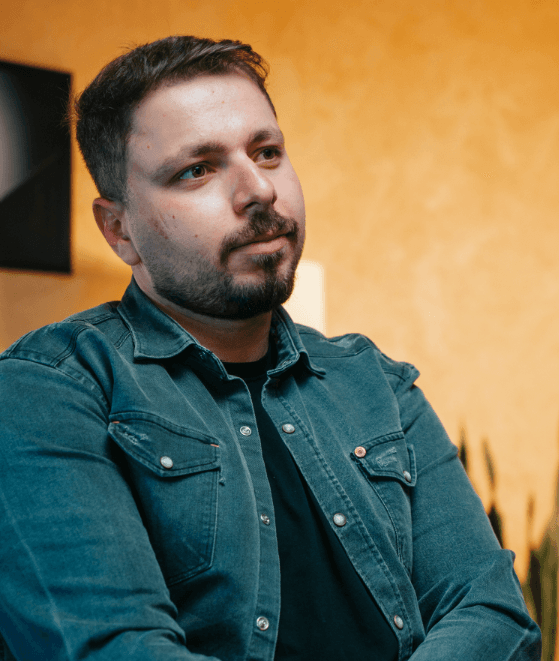
Moe Alkhafaji is the founder and CEO of Pure Platform, a one-stop shopping application that offers customers worldwide a universal shopping cart via the mobile app. Mr. Alkhafaji has a bachelor’s and master’s degree in computer science. His background in computer science and expertise in AI and technology have driven him to venture into all different sectors, creating tech-based solutions to make people's lives easier. He is a serial entrepreneur with more than seven companies in the health tech, fintech, and auto tech industries. In this Interview, Mr. Alkhafaji highlights the global challenges of cross-border shopping and shipping and his innovative business model to address them. He walks us through the journey of establishing Pure Platform and its impact on the digital economy and job creation. He also talks about the acquisition of Pure Platform’s operation license by the International Smart Card and the mutual benefits this brings to both parties. In addition, he discusses Pure Platform's expansion plan to up to 60 new countries and how to balance scalability and sustainability. Furthermore, he sheds light on leveraging the power of AI in business creation, development, and recruitment procedures to stay ahead of the curve in the modern day.
Can we start with a brief introduction about yourself?
My name is Moe Alkhafaji. I left Iraq when I was 15 and have since spent most of my life in the US. I completed my bachelor's and master's degrees in computer science. I enrolled in a PhD program in the same field but then withdrew to start a company because I felt the PhD study was not progressing as quickly as I had hoped. I am a serial entrepreneur, starting from college. I unofficially launched my first company, which provided enough income to support my way through college, allowing me to invest and expand further in this field. In 2018, I co-founded my first official business with two other partners. Since then, I have co-founded seven companies, the latest being Pure Platform. Pure Platform is the first company targeting an audience outside of the US. All these companies, including Pure Platform, are US-based. When I established Pure Platform, I focused on cross-border e-commerce and fintech. We decided to launch in Iraq, given my Iraqi background and understanding of the culture, although upon my return in 2018, I felt the need to reacquaint myself with the culture in terms of language and practices. Pure Platform has since expanded from Iraq to other countries as well.
You established multiple different startups. In what sectors were you operating, and what solutions were you providing?
All of them were within the technology field but with different applications, primarily in health tech, fintech, and auto tech. Regarding health tech, I was involved in various verticals, starting from working on a decision support engine that empowered a virtual doctor using AI in 2008. Back then, we competed with and surpassed IBM’s Dr. Watson in terms of accuracy. As a startup company, I developed that engine, which expanded to many different hospitals; it was used in over a thousand hospitals in the US, and over 150 million Americans’ health data would pass through the cloud-based system we built in 2008. The cloud was still new in the US, and we had to build many of the native tools from scratch. The company was acquired three years later by the University of Pittsburgh Medical Center (UPMC) and Merck Financials, which is one of the largest venture capitals on the East Coast of the US. Additionally, I worked on diagnostic and risk-assessment-related problems in various types of cancer by leveraging research and data and co-founded a couple of companies in this area over five years. I also engaged in fintech, focusing on financial instruments and, later, auto tech. I co-founded a company that helped develop an app for regular customers to understand and build their relationships with their cars through understanding maintenance needs and forecasting future requirements such as oil changes or tire rotations. This app became hugely successful in the US, with a base fleet of vehicles using it as a backend platform, and even Uber utilized it for fleet maintenance alongside other big companies. I worked across several domains, including the medical insurance vertical and claim analysis, much of which involved AI and blockchain. All these enterprise applications were cloud-based. I finally ended up with Pure Platform. Pure Platform is a hybrid fintech e-commerce solution that eliminates friction between buyers and sellers regardless of geography.
Please tell us about Pure Platform and its business model. What specific challenges were you aiming to address in the cross-border shipping and e-commerce area?
When I visited Iraq, I was surprised to hear about the challenges people face when buying from Amazon. They mentioned they needed specialized individuals skilled in dropshipping, armed with several tricks and tips to get around the issue of payment. I believe that every country has relatively easy access to local commerce, but cross-border e-commerce is a global problem. As a result, we delved into the dropshipping model, studying its challenges and the role each third party involved played in the process. We decided to take all the burdens and complexities behind the scenes, enabling customers to purchase products from countries like Turkey, UAE, Saudi Arabia, or the US. This led to the birth of Pure Platform. As a business model, we aimed to tackle some existing issues with dropshipping. So, what exactly is dropshipping? If I want to buy from the US, I must rent a mailbox in the US and use it as my address. However, this poses issues, as I may encounter VPN problems when trying to create an account with US vendors. I often must pretend to be American just to open an account. Moreover, cross-border transactions, especially during discount seasons, can be problematic for Iraqi credit cards, or any non-local credit cards for that matter. If I am fortunate enough to obtain a credit card, there would be issues with having a matching billing and shipping address and various other problems. Moreover, I only know the final cost once the item arrives at the mailbox address. The mailbox company then measures the dimensions and informs me of the shipping cost to Iraq. This means I am purchasing a product without knowing the final cost or whether it is permitted through Iraqi Customs. Customers need to possess knowledge of customs regulations, shipping cost estimation, and any associated expenses. Surprisingly, even in countries with international vendors such as the UAE, for example, nearly 80% of Amazon UAE products that are purchased locally come from the US, customers face unexpected additional costs and the risk of customs confiscation without proper knowledge beforehand. To address these challenges, Pure Platform relies on proprietary AI algorithms to determine customs status and cost, shipping costs, and packaging dimensions. However, acquiring accurate training data was initially challenging, leading us to huge losses on wrong estimates. Today, our accuracy has significantly improved, with mistakes occurring only once out of thousands of products. Additionally, we simplify logistics by providing a unified tracking view for customers, bridging local and international delivery companies' handling. We are confident that Pure Platform stands as the only app worldwide to solve these issues collectively, perfected by the use of ever-learning AI algorithms, automatically estimating product details, arrival time, and tracking.
How did you leverage AI to navigate the Iraqi market's lack of clear customs regulations and information?
The challenges with AI are plenty. We cannot rely solely on data to solve some of these problems. Sometimes, we need to examine the role of heuristics in shaping our conclusions. For example, understanding what is prohibited from entering or leaving country borders may not be straightforward; while a list of common items may be provided by the customs, in any country, it is still challenging to classify items accordingly. I recall an incident where a watch for young girls was confiscated in Iraq because it could take selfies, being mistaken for a spy camera. This highlighted the need for AI to analyze descriptions, past experiences, and item details to determine if it can pass through customs with a high probability of confidence. The challenge becomes twofold. For a company like ours aiming to scale globally, replicating this process in every country is impractical, requiring years to develop AI algorithms. The question is how do we build a highly scalable AI infrastructure that learns rapidly with self-reinforcement learning, avoiding starting from scratch in each country? Additionally, the lack of diversified data poses a significant challenge. Accumulating accurate data gained from experience over time is crucial. However, this data cannot be purchased, making it a challenge in every country. We rely on AI to establish a baseline and continually learn and adapt quickly. We can modify the baseline by providing early inputs and structuring categories as relevant, enabling us to adapt to different countries like the UAE, for example. Recently, a renowned international shipping company approached us to run certain items through our algorithms to assess their customs clearance possibility. Despite being a clearance company themselves, they valued our algorithms' accuracy, which sometimes outperforms human judgement. This demonstrates how we leverage AI not only for current operations but also for scaling to other countries and improving our product.
What led to the adoption of an operation license model to expand Pure Platform into other countries? How has this approach contributed to its growth and scalability?
We first officially launched in Iraq in February 2020, about a week or two before the COVID-19 closures began. I often joke that we timed it perfectly. We aimed to address cross-border e-commerce and money transfers and settlements. We wanted to focus on the core problem rather than on international shipping, last-mile delivery, localization, or marketing, which others could handle better. Over the past four years, we have made significant progress in addressing the core problem that seemed to be too improbable to solve. When we initially launched, we decided to create a business model centered around an entity in the US that focuses on technology, partnerships, and business development. We relied on establishing franchises or partnering with local entities in other countries to handle localization. Today, Pure Platform functions as an umbrella corporation, encompassing technology, partnerships, business development, and operations. Operations include processes such as payment processing, the purchasing of merchandise, quality checks, packaging, shipping, last-mile delivery, customer communication, and issue resolution. We even engage with customers through social media platforms, speaking the same local language to enhance communication. We launched in Iraq as a proof of concept to demonstrate viability and scalability. We aimed to convince Iraqis to change their behavior toward payment methods and online shopping. Additionally, we strived to grow large enough to attract the interest of local players to acquire operational licenses in other countries. Our success in Iraq, measured by financial metrics and acquisition by the largest fintech company there, validated our model. It also enabled us to plan for expansion into other countries, relying on local partnerships to navigate regulatory complexities and cultural barriers. We have partnered with investors in UAE and Saudi Arabia, aiming for rapid growth in those markets. Additionally, we are collaborating with an international shipping company to access up to 60 markets. Our upcoming launch in UAE will serve as a proof of concept for this partnership, which will accelerate our expansion efforts globally. Our vision is to replicate this model across numerous countries, leveraging partnerships for rapid scalability.
Are you considering expanding to other countries in the MENA region or the European Union? What criteria are you considering for potential expansion?
Yes, as we mentioned earlier, this is a global issue. Businesses in England, for example, are struggling with e-commerce between England and the rest of Europe due to Brexit. Customers still do not know the final cost of transportation, even when buying within the European Union between Poland and Germany, for instance, which is a major issue with global impact. We are quickly attracting interest across the globe, not just regionally. We were approached by one of the largest clothing companies in India because they discovered us indirectly through platforms like Amazon. They wanted to partner with us to enter Middle Eastern markets such as Iraq, Saudi Arabia, and the UAE. Additionally, we have an exclusive online distribution partnership with one of the most prominent vendors in the Middle East. We also had discussions with one of the largest football clubs in the world, as they have a fanbase in Iraq, Saudi Arabia, and UAE but desire more representation of these fans buying their products. Pure Platform presents a natural plug-and-play partner to enable online distribution in these countries. Furthermore, we were contacted by a Brazilian manufacturer that sells over 2 million units of a popular drink per month in the US and European countries. They see Pure Platform as a potential avenue to expand into the MENA region. We were also approached by two large investment groups, one representing 15 African Union countries in Central and Western Africa and the other representing five countries in Eastern Africa. They expressed interest in partnering with us to launch in their regions. Recently, we had discussions with one of the largest suppliers of products in China to address issues related to exporting high-quality Chinese products. We aim to help them distribute these products across Middle Eastern and African countries. Our focus is not only on launching markets and bringing products from them but also on establishing two-way trade across vendors. This aligns with our goal of solving the original cross-border problem and allows us to become highly scalable. For example, every country has strict laws about data sharing. We have built a scalable infrastructure that allows us to launch in Saudi Arabia and UAE in isolated environments while mimicking the features of the platform we built for Iraq. This ensures data segregation while offering a consistent user experience across all Pure Platform apps. You are not only allowing customers from different parts of the world to access global markets but also enabling those markets to access customers globally. Expanding on both sides, supply and demand. How does the expansion on both the supply and demand sides reflect on the Iraqi market? Yes, and this also works both ways. As part of our global expansion, which started with regional growth, our international partnership with the shipping company will enable us to scale to up to 60 countries. We are very ambitious and aim to achieve many of these expansions within the next 18 months. Therefore, you will see a majority of them happening this year. We are not spreading ourselves too thin or focusing on other markets; we try to complement the current local market in Iraq. Iraq will have access to different markets simultaneously, aside from the usual ones. Today, Iraqis have access to the UAE, Turkish, US, and Chinese markets to some extent. However, through our platform, for example, we enabled e-commerce from new markets such as Saudi Arabia and Qatar. I believe this expansion offers a wider selection of products and aids in our focus on B2B and small businesses in Iraq through Pure Plus, our own website within the app. Similar to Alibaba, AliExpress, or Amazon, Pure Plus allows local merchants to create accounts, have their own pages and links, and upload products. Using AI, we complete product descriptions, estimate customs and shipping configurations, and translate them into different languages. Now, someone in Iraq building their own product can sell it through e-commerce, with us handling everything from payment to logistics and customer support. They can sell their product to Saudi Arabia, UAE, and every other country where Pure Platform operates. As we scale to a list of those 60 countries in the next 18 months, this will enable Iraqi businesses to sell their products to hundreds of millions of customers rather than just in Iraq. The Iraqi market is very cost-effective for Gulf countries. Products like sweets, handmade crafts, paintings, and many others are incredibly affordable to foreign customers. This is also true for the European market as well. This global expansion benefits customers both ways.
How do you guarantee the reliability of merchants on your platform?
Pure Platform customers from different countries can purchase Iraqi artists' handicrafts. We already have over 100 local Iraqi products on our platform, for which we conducted a proof of concept by manually reaching out and recruiting merchants. The biggest challenge in Iraq is that we cannot verify if someone is a legitimate business. They could be a real business but not registered, or they could be a fake business but registered, or another combination of both. Now, we must guarantee the reliability and consistency of products on our platform because these are challenges we need to address. We have some ideas on how to solve this using technology and by creating a trustworthy platform where customers can buy from suppliers without having to worry about trusting them. We conducted a small proof of concept with a few businesses focusing on Iraqi products. We have very aggressive plans to scale to medium-sized and large corporate accounts but also open avenues for smaller businesses. We will clarify how we validate and guarantee products to protect both the customer and the business. Hopefully, this will help expand the economy, as these businesses will have e-commerce as a service, which we offer for free. We make money off of transactions based on an agreed-upon percentage. Businesses have nothing to lose; they can launch and sell products in many countries without investing anything. This is what we are trying to develop by the end of this year.
How does Pure Platform contribute to the Iraqi digital economy? How do solutions like Pure Platform help provide more people with better access to opportunities that did not exist before the digital world?
Pure Platform has made a significant impact on the Iraqi economy, particularly in the digital scene and the broader economy. When we launched, the customs cost imposed initially by dropshipping companies exceeded 10%, despite most products being taxed at 5%. However, Pure Platform's accurate charging of customs fees helped drive prices down across the country. Now, customs costs rarely exceed 5%, setting a new standard adopted by other platforms. Additionally, we were the first company in Iraq to reduce the cost of shipping per pound to under $10, significantly lower than the previous average of $10 to $14. This reduction to $7.75 has benefited numerous businesses. Compared to before the launch of Pure Platform, cross-border economies are now thriving. We implemented a policy of charging fees based on "real weight," meaning charges are proportional to the actual calculated weight of the shipment, down to fractions of a pound. This approach revolutionized the industry. We have also overstretched the limits of last-mile delivery in Iraq. Most of the challenges we faced originated within the borders of Iraq. One of the significant challenges is the average last-mile delivery cost of an order in Iraq, which ranges between 15 to 25 thousand Iraqi dinars, approximately $11 to $18. The average order value on Pure Platform is over $283. Now, when a delivery person has hundreds of dollars worth of merchandise per order and probably over 40 orders, and he earns around a thousand Iraqi dinars per order, this introduces a big challenge. This situation has stretched and challenged the local economy’s last-mile delivery. Consequently, many delivery companies, from the smallest to the largest ones in the market, refused to sign contracts with us to provide guarantees or service level agreements (SLAs) because they could not control their own employees, especially in smaller and remote provinces. This necessitated a new generation of last-mile delivery services to keep up with the progress that Pure Platform is introducing to the market. Moreover, some of the most significant social commerce Meta and Instagram pages in Baghdad are sourced from our app, impacting individuals and smaller businesses significantly. For instance, one small AR/VR headset business established in Baghdad is a Pure Platform customer, flourishing by sourcing its products from our platform. Additionally, a distributor of manuka honey in Baghdad also started as a customer with us. Many pages rely on buying and selling products from Turkey, such as clothing and other items. We are actively contributing to the local economy and will be emphasizing this aspect through our B2B approach. Today, these social commerces are selling at face value and making their profit from our unlimited last-mile delivery service. For example, with 20 customers in one order, we are paid 250 dinars for the entire order, while the merchant collects 5,000 dinars per order delivered at face value, totaling 100,000 dinars in profit. We have created numerous creative economies for these smaller businesses. Moving forward, we aim to provide additional incentives throughout the year. We aim to ensure that when we deliver the product to the final customer, they recognize it as a Pure Platform product. We do not want them to bypass their own merchant and buy directly from us. To achieve this, we plan to offer explicit discounts to the merchants. The merchant can then share some of the profits with the customers, enabling them to purchase the same product at a lower price through the merchant via Pure Platform. This approach ensures that customers receive the guarantees of Pure Platform while enjoying lower prices through our merchant network. Encouraging people to start businesses, especially small enterprises, will be our focus for the remainder of the year.
What value does the International Smart Card (ISC) acquisition of Pure Platform’s operation license bring to both parties?
The acquiring company, International Smart Card (ISC), evaluated the numbers we were producing for Qi Card cardholders. They noticed that we were leading in terms of the number of transactions and the amounts, even compared to other vendors or partners with whom Qi cardholders spend money or have partnerships. This recognition indicated a lot of potential for the ISC. It adds value by persuading people to keep their money in their accounts, thereby reducing cash withdrawals by the end of the month. It is about convincing them to spend using their cards for everyday shopping. Pure Platform presents a natural way for customers to interact using their Qi cards. For Pure Platform, there is a tremendous advantage in leveraging Qi Card’s vast network of customers in the country. Partnering with Qi Card demonstrates the credibility of our platform, affirming our seriousness about business in Iraq. At Pure Platform, we focus less on accessories such as offices and more on delivering the best service possible. Therefore, this partnership adds credibility. The Qi Card name would make people feel even more comfortable, which brings mutual benefits to both sides. This works because Qi Card is responsible for localizing everything in Iraq. All the local operations are exclusively owned and financed by Qi Card, granting them the right to advertise using the brand of Pure Platform. They will expand the customer base, establish offices, invest in customer support, hire new employees, finance outreach to B2B, and open new markets and channels. All of this is in exchange for a licensing fee paid directly to Pure Platform, the US-based company that owns the technology, and international relationships with vendors and partners. Pure Platform does not own any equity in Qi Card, and vice versa. Instead, there is a renewable license fee, as well as a revenue-sharing model between Pure Platform in the US and Qi Card in Iraq. This partnership will yield significant advancements and transformative changes, not just within the companies themselves but also within the broader economy.
Are there any synergies between the Pure Platform and other players acquired by the ISC?
The management of Pure Platform remains unchanged, as does the business model, though prices have decreased further, including delivery fees. In terms of synergies, we have begun to collaborate more closely with the main entity, implementing ambitious solutions aimed at reducing costs without impacting the bottom line for Qi Card while also expanding the base for Pure Platform. In terms of synergies, the focus has primarily been on marketing rather than on the core product. Both companies are undergoing tremendous transformations. Qi Card has been very focused on transforming many aspects of its entity, including systems and frameworks. They are undergoing significant advancements by introducing new IPs into their systems, forming international partnerships, and launching a super app. Pure Platform is expanding into new verticals globally. Much of the collaboration has been centered around marketing and sharing business intelligence and insights. We have plans to leverage each other's strengths and support one another in our respective strategies. However, significant progress has yet to materialize due to the fast-paced nature of our operations.
How do you balance the need for expansion and scaling with maintaining a focus on quality and sustainability within your businesses?
We resisted the idea of creating our own last-mile delivery company in Iraq despite the pressing need for a service that could match our international shipping quality and technology. We also hesitated to establish our own warehouses, expand our product range, and purchase and resell products. While we could have monopolized certain products like iPhones, making a $100 or more profit per sale, we chose not to. Such opportunities conflicted with our principles. Instead, we wanted to focus on what we excel at and aspire to excel at: our core business, which is AI-based and technology-driven. Our goal is to address cross-border challenges and enable e-commerce operations both locally and internationally. It is crucial to prioritize growth, as staying stagnant is not an option. Growth not only drives expansion but also enhances the sustainability of our local business. By scaling up, we can leverage economies of scale to obtain lower prices and higher discounts and ultimately benefit our existing customer base. We can offer cheaper delivery fees because we can provide import and delivery companies with a higher volume of deliveries due to our expansion. As we expand into other countries, economies of scale come into play, allowing us to demand more from these companies. Growth is essential, but to achieve it, we must understand our weaknesses and strengths, as well as our core values. As we expand globally, through our international partnership with a company that will potentially allow us to operate in about 60 countries, we are outsourcing a significant portion of logistics to them. They will take over our warehouses but operate them exactly as we do, using our systems. They are customizing their systems to operate the Pure Platform way. In return, we reduce operational costs and focus, allowing us to concentrate more on expansion and technology. Not every customer understands sustainability. When a customer receives an order after 2 weeks, for example, this may not be a clear indication of how long it would take the next order. The challenge lies in providing consistent and successful experiences rather than focusing solely on speed of delivery. It is incredibly difficult, much harder than it sounds, especially considering factors like government regulations and constantly changing customs laws. Maintaining consistency amidst these challenges is crucial for sustainability. How can one achieve sustainability despite such obstacles, which can greatly impact income, revenue, and marketing expenditure? These are two distinct areas, each with its challenges, yet they complement each other. As you expand globally, you contribute to sustainability and consistency locally. By enhancing sustainability locally, you can offer a more attractive business model to other countries, facilitating international scale and growth.
How do you approach talent acquisition and team-building within your ventures, especially in a market like Iraq?
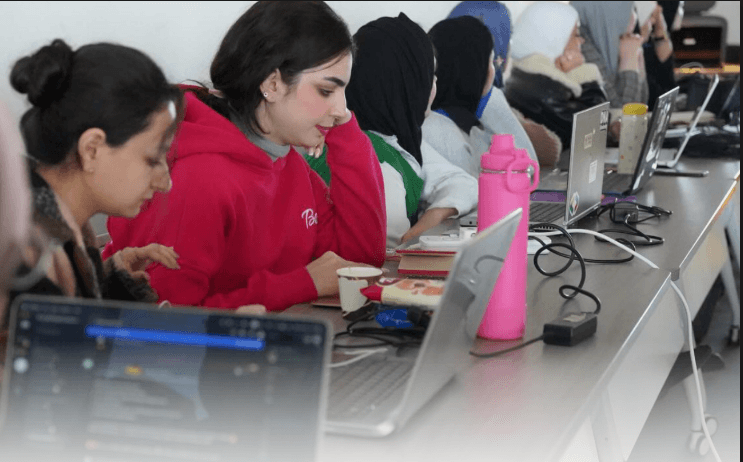
Acquiring skilled employees is a very difficult problem globally, even in the United States. One of the biggest issues for my startup companies in the US was finding the right talent. The traditional method of relying on CVs or resumes often falls short because sometimes the right talent is unconventional. When it comes to interviewing, I take an untraditional approach; I do not look at CVs or resumes. Instead, I focus on identifying qualities in the person themselves – how ambitious, motivated, excited, and passionate they are. However, even with this approach, there are many challenges. We currently have 65 employees, with plans to scale up to about 75 in the next month. The vast majority of our employees are based in Iraq, and interestingly, more than 50% of them are women. Most of our workers operate remotely, working from home online. Before Pure Platform, the challenge in the US was the shortage of skilled programmers in the market. If I recall correctly, despite creating 1.5 million IT jobs annually in the US, there were only 300,000 graduates in software and computer science. This shortage necessitated the recruitment of international talent to address the technology gap, resulting in a persistent lack of technologists in the market. A successful solution emerged through rapid training programs known as boot camps. These programs transformed individuals into programmers within three to six months, focusing specifically on the technology relevant to the employer's needs. This approach gained popularity, leading to the establishment of numerous boot camp companies. I launched a boot camp company, recruiting individuals and providing them with training before selecting the best candidates to join our company. This strategy allowed us to mitigate the risks associated with hiring the right person, although it added a lot of overhead to recruit and train individuals. I began reaching out to Iraqis in the US, offering them training opportunities. Many Iraqi immigrants expressed interest and attended our training sessions. Subsequently, I started hiring Iraqis based in the US. In 2016, I partnered with a local startup company, and they assisted in recruiting younger Iraqi talent for me residing in Baghdad. I began training them online remotely, selecting the best performers. Subsequently, we started paying them salaries and allowed them to work from home. Additionally, we began outsourcing American-based projects from American companies to them. They performed exceptionally well. These talents developed rapidly. They have been working on top technology in the US, including cloud-based terabytes of data and Amazon native services, since 2016. Our trainees were utilizing platforms that were not typically used in Iraq at the time. I believe we were among the first to utilize Flutter back in 2019. This became our model. Today, we train numerous younger talents for free. We train up to 40 people on the latest technologies without fees. From this group, we select the top performers and offer them employment. Therefore, we rely on ourselves to train our resources rather than solely relying on individuals with 20 years of experience in the market. That is our current approach. Regarding acquisition, recruiting people can be challenging. We typically reach out to potential candidates on LinkedIn and invite them to our training courses. Recently, we posted three positions on LinkedIn and received 300 applicants within two days. We leveraged AI tools to conduct initial interviews, allowing us to identify top candidates efficiently. I personally review the entire process to ensure thoroughness. This successful approach may become our new standard. We are also exploring an AI initiative, "IntelliQi," developed in partnership with Qi Card, to facilitate future recruitments. This model can communicate in both Arabic and English, including Iraqi slang, providing valuable insights and assistance throughout the recruitment process.
How will artificial intelligence and data analytics shape the future of businesses in the near future? And what can companies do to stay ahead of the curve?
There are two main concepts: data analytics and AI. Although people often confuse them, they are distinct in terms of focus, methodologies, and goals. Data analytics involves uncovering correlations between factors, understanding the business, identifying key performance indicators (KPIs), and providing valuable business insights. It can also be leveraged for predictive analysis. For example, we reduced delivery fees to 250 dinars while almost all businesses deliver at a rate of 3000 IQD or more. Through "What If analysis," we determined that by increasing the number of orders by a certain percentage, we could break even with the cost and leverage higher profits from the international shipping revenue. This exemplifies our data-driven approach. AI opens up various avenues for business empowerment. It enables businesses to take action and learn. By integrating data analytics into AI models, businesses can take actionable steps, such as interviewing customers or implementing intelligent chatbots and discussions in Arabic or English. This not only provides a competitive advantage but also builds IP for the company, which is crucial for long-term success. Building a portfolio of IP is essential for maintaining a competitive edge and optimizing processes. By leveraging AI tools and models, businesses can become more efficient and reduce reliance on labor-intensive processes. For instance, we utilize robots for 85% of our purchases and order tracking, which significantly lowers costs and enhances efficiency. It is important to recognize your position on the AI spectrum and remain humble about your expertise. Embracing a learning mindset allows for continuous improvement and adaptation to new developments in AI.
Article Information
Details
- Author:Moe Alkhafaji (Founder and CEO, Pure Platform
- Published:September 21, 2025
- Issue:13
- Read Time:25 min
Need Custom Analysis?
Contact our research team to discuss your specific business landscape analysis needs.
Contact UsMore from 13