13•Article
The Role of Technology in Fostering Economic Growth: The Case of Iraq
Akel Al-AnsariSeptember 21, 202515 min read
Article Summary
Discusses how technology drives economic growth by improving productivity, enabling innovation, and fostering digital entrepreneurship. Iraq can benefit from adopting digital tools in education, healthcare, and finance, but challenges like infrastructure and policy gaps remain.
Introduction:
Ever since the beginning, humankind has been looking to improve productivity. This started within the agriculture industry, moved to the Industrial Revolution in the 17th century, when technological adaptation enabled employment productivity and ended with the wide use of the internet in developed countries in the late nineties and the beginning of the 21st century when we witnessed the “dot com” revolution.
The internet revolution is considered a milestone humanity has achieved, enabling it to provide new products and services effectively and efficiently, creating more jobs and opening more markets. This can be especially noticed in developed nations such as the G7 countries, which represent 58% of the global net wealth in 2023 according to the OECD.
Arguably, the main drive of the growth in the G7 countries was their ability to innovate, especially in the area of information technology. Moreover, in recent years digitalization has given them the ability to advance in the transfer of information and telecommunication in all shapes and forms, such as advanced infrastructure up-skilling their human capital, elaborate infrastructure to enable fast internet, and detailed legislation to protect technology developers and their rights.
Looking into the case of Iraq, throughout history, Iraq played a major part in these developments when Europe was living through these so-called “Dark Ages.”
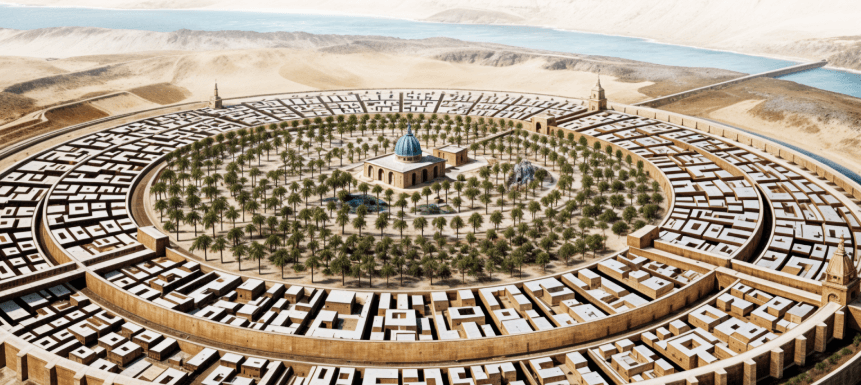
In Baghdad, the House of Widsom (Bayt-Al Hikmah) was born in the late 8th century. Bayt Al-Hikmah was the equivalent of the Silicon Valley of our age, where people were able to meet to exchange and develop ideas and translate some works from other languages to make them available to other innovators.
Fast moving, the Iraq we know today has lost its leading role due to many factors, mainly wars and occupations, which have destroyed Iraq.
During the 20th century, Iraq started to keep up with the world the world once again. However, it was not long until it started to suffer another period of war and political unrest.
This article will look into “The Why” behind Iraq’s inability to escape this setback post-2003 war, examine the opportunity loss for non-oil revenues, the impact on the banking sector, and elaborate on why it would be beneficial to use the latest technology using the framework that has been adopted in developing countries, to end with conclusion and recommendation in line with UNDP digital landscape assessment of 2023.
Why Iraq is Behind in Terms of Technology
In the last 15 years or so, Iraq has been playing catch-up with the world, but it has been making slow progress for many reasons, mainly:
1. Skill gap
2. Lack of know-how
3. Inability to identify development needs
4. Inability to adopt technology
5. Lack of will
Arguably, this list can go on for as long as anyone wishes. However, when discussing the above main reasons, it can be seen as one vicious circle in which each reason contributes negatively to the other.
Iraq’s human capital has been suffering for decades. Pre-2003, Iraq was under global most-restrictive sanctions. In combination with wars, brain-drain, and lack of proper governance, Iraq ended up with an underdeveloped workforce that once was famous for its competency and professionalism.
The skill gap resulted in a general lack of know-how in Iraq post-2003, which, amongst its results, led to difficulties in identifying the needs for the development of the country and the technology required to satisfy these needs. This reality, combined with the turmoil and continuous crisis, has shifted Iraqi decision-makers' priorities, weakening the will to engage with development efforts in favor of solving critical problems.
Ignoring solving problems and instead engaging in alleviating their symptoms caused more crises and led to lowering the priority of developing its human capital. In addition, relying on oil as a main source of income instead of developing its human
resources and acquiring advanced technology to build new sources of income further reduced the priority of human capital and technology attraction. As a result, the vicious cycle continues.
All the above-mentioned reasons resulted in Iraq's inability to acquire much-needed technology and engage with technology companies or users to transfer it to Iraq.
As a result, much of Iraq’s human resources are not in contact with advanced technology and are unable to implement it to solve local problems. There is an acceptable argument that the developed nation refuses to transfer the technology to the developing nations, mainly because of the competitive advantage they want to maintain, but also due to copyright issues and the direct benefit, as this technology is normally costly to develop. However, there are suitable mechanisms that can be used to attract this technology, such as engaging in direct investment or partnering with companies that have or use this technology via:
• Foreign Direct Investment
• Partnership
• License
• R&D and R&D Partnerships
In other words, Iraq can obtain the latest technology to improve its economy by identifying and engaging with the right stakeholders.
This inability to attract, adapt, and use the latest technology has impacted Iraqi economic growth and its ability to diversify the means of revenue, which resulted in the economy becoming sick of the ‘Dutch Disease’ which means suffering negative consequences due to the increase of the availability of certain valuable natural sources.
Opportunities Loss
Government Revenue Collection
To demonstrate the usually ignored impact of opportunity loss on Iraq, an analysis of its annual budgets from 2016 to 2023 will be used. This analysis will show what Iraq did and does manage to collect the revenue that has been budgeted in the annual budgets, as this would increase the GDP and real cash, which could be used elsewhere.
Arguably, the majority of non-oil revenue comes from state income for services and tax collections along with charges. The collection of this revenue would require advanced technology to identify, engage, obtain, and monitor. Thus, if Iraq had managed to use the latest technology, it could have benefited from this revenue and used it in other areas to develop its economy and enhance its services. Furthermore, Iraq would be seen as an attractive destination for investors and would benefit from direct investments, which would mean improving the labor market, resulting in the reduction of the unemployment rate and the dependence on the state to create jobs. This would also result in a reduction in the wage bill that was valued as of December 2023 at 47 trillion Iraqi dinars, according to the Ministry of Finance.T IQD, (MoF, MI Dec 2023) and is continuously growing.

Notably, it was only in 2017 that Iraq managed to collect its non-oil revenue in line with the budget forecast. In numbers, this means that over the last eight years, Iraq lost an opportunity to collect over 27 trillion Iraqi dinars. Assuming Iraq collects this amount of cash, it would have resulted in a great chance to build its infrastructure along with thousands of job opportunities and a positive impact on its GDP, which also means further growth opportunities.
The Banking Sector
The above example is also applied to several other areas, such as the banking sector.
Without the use of minimum technology, the banking sector is not only lacking behind but also losing opportunities such as:
● Ability to onboard customers at the account opening stage: This process could
take months and require several visits to the branch/offices, making it difficult to
do business in Iraq.
● Provide the proper facilities, such as trade loans, global money transfers, and
documentation.
● Account and transaction monitoring to prevent money laundering, meet
regulatory requirements, and be in line with the global standard.
● Lending, as it is very difficult to obtain credit facilities in Iraq due to the
bureaucracy as a result of not using the technology to enable the bank to make
lending decisions.
● Managing lending risks such as defaulting and collection.
The banking sector, which is considered the most important sector for any growing economy, is lagging behind and hindering economic growth due to its limitations in comparison to the region and global situation.
With no doubt and clearly evidenced, Iraq lost many opportunities to improve its economy and enable growth by adapting and adopting the latest technology.
Adopting Technology:
The Department of Science and Technology of Cambodia undertook, as part of its Roadmap for 2030, several measures in line with OCED guidelines to make use of technology as a means to improve economic growth. Similar approaches can be implemented in Iraq to achieve the same goal.

SIT 2023, designed by the author
Industrial Growth and Diversification
According to the December 2023 MI of the Ministry of Finance, 93% of Iraq's revenue came from the oil industry. Hence, for Iraq to diversify its income, it must obtain and adopt the latest technology, enabling other sectors to grow, such as agriculture and banking, tourism, and service industries.
Job Creation and Skills Development
Using the latest technology would also improve human capital, enhance the skills of the workforce in line with the market requirements, and tie the education system to the market, which would result in job creation to the locals.
Innovation Ecosystem Development
In the last few years, with the improvement of the internet's stability and public adaptability, we have seen an increase in the number of startups in Iraq, creating an entrepreneurial ecosystem. Therefore, adaptation would only improve the growth of this industry, encourage innovative ideas, and enhance R&D for further development and growth.
Infrastructure and Capacity Building
Technology would undoubtedly benefit Iraq just like any other developing country, which would enable Iraq to develop its infrastructure, such as establishing research centers, and research labs and creating training centers that support its economic growth sustainably.
Health Care Sector
Using the latest technology in the health care sector will improve the health of the Iraqi nation, as for now there is no database for the individuals, and no capacities such as sharing of test results or the health history of individuals, resulting in wrong identification of the issues and increased costs for the individual which possibly means an increase in sick leaves and other costs.
Education Advancements
The Iraqi education sector would benefit from adapting new technology at all levels starting from preschool to postgraduate research courses.
For example, at the preschool level, technology would enable monitoring of children's progress. Moreover, it will encourage mothers to return back to work after maternity; in this way, mothers will not lose career opportunities and have a work-life balance, which would result in economic growth.
Higher education, when linked to market requirements and needs, will result in greater collaboration between the two; it will provide the latest research and developing technology along with ideas to enhance the skills and re-skill the workforce.
International Collaborations
Adapting the latest technology will open the Iraqi economy to collaborate with the rest of the world and also enhance the comparative advantage of the products and services Iraq might have.
Sustainable Developments
Using, adapting, and enhancing the technology would result in sustainable economic growth and development at all levels, the technology would enable the Iraqi
economy to “get it the right first time” which also means long-term growth with controlled costs.
Conclusion and Recommendations:
This article has discussed the crucial role that technology can play in economic growth, which outlines the history and provides proof that the G7 wealth and sustainable growth were because of the development and adoption of the latest technology and also by creating an environment that enables the creation and the adaptation of the technology and most importantly investing in technology.
In the case of Iraq, it is lagging behind for many reasons. Thus, to defend the Iraqi economic situation, anyone could use a long list of excuses for not adopting change and moving forward with technology.
The cost of not developing, adapting, and adopting was a huge cost to Iraq. This article argues that if Iraq used technology to collect budgeted revenue, it would have made massive amounts of net cash. The article used one example to illustrate the use of non-oil revenue collections for the last eight years to find that the difference between the budget and actual collection was a negative 27 trillion Iraqi dinars, just above 57% of the annual wage bill, as this is actual cash, and is considered as huge opportunity loss to the Iraqi economy. The same approach can be used to demonstrate a similar effect on many other industries in Iraq. The article acknowledges the challenges of implementing technology and gives some examples of how to overcome these challenges.
Recommendations:
● A clear strategy to reduce the reliance on the oil revenue.
● Federal annual account should be seen as important as the budget, thus, all
departments must be accountable.
● Direct and clear technology adaptation budget.
● Link education to the market needs.
● Clear strategy encouraging each department to adopt the latest technology.
● Engage in foreign direct investment.
● Create a technology hub, where developers, investors, and end users can
meet. For example, we can call it Baghdad Technology Valley (BTV).
● Enforce the copyright law.
Article Information
Details
- Author:Akel Al-Ansari
- Published:September 21, 2025
- Issue:13
- Read Time:15 min
Need Custom Analysis?
Contact our research team to discuss your specific business landscape analysis needs.
Contact UsMore from 13